
| Jill Fredston | |
|
Interview by Gavin J. Grant |
|
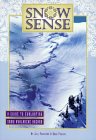
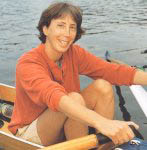 Jill Fredston, author of the Book Sense 76 Pick Rowing to Latitude: Journeys Along the Arctic's Edge, and her husband Doug Fesler are avalanche experts and codirectors of the Alaska Mountain Safety Center. Almost 20 years ago they published Snow Sense: A Guide to Evaluating Snow Avalanche Hazard, which is required reading for the National Ski Patrol -- and anyone who lives in snowy regions.
For the past 15 years or so, Fredston and Fesler have spent every summer -- rain, wind, or shine -- on the water. They have rowed around Norway, down the west coast of Greenland, around Spitsbergen, and more: in all logging more than 20,000 miles. When they aren't rowing, they live in the mountains above Anchorage.
Jill grew up quite near BookSense.com's home base in Tarrytown, NY -- she was raised in Larchmont, NY, a village on the Long Island Sound. I flew up to Alaska to have lunch and a chat at a fishing village near...wait a minute! We don't do that sort of thing around here! (Yet?!) So, we talked by phone.
BookSense.com: I love the way you've gone out and done your own thing (rowing for three months at a time), and you don't feel as if you had to defend it in any way.
Jill Fredston: I think there's a freedom that comes as you come west -- and certainly in Alaska. I notice it more when I go to the east coast. People will talk about our expeditions, or ask how we get so much time off. There are more questions about where you went to school, what kind of stuff you're doing for a career. That kind of stuff falls off as you go west. I have never really been asked to justify it.
In the U.K. and Europe jobs come with a lot more than the two weeks vacation that U.S. companies give. To me the ratio of work to time off is wrong.
I agree. I've been thinking about this a lot lately. There was a helicopter pilot who always picked us up at the top of our driveway to go to avalanche rescues -- he was the best pilot I've ever flown with, and I've flown in a lot of bad situations -- he just died in a helicopter crash. If he can die in a helicopter crash, then I can die in an avalanche accident tomorrow. You wouldn't have expected it. Some of it is just the law of probability catching up with you. Recently I received an amazing letter from a woman who had read Rowing to Latitude. I'd met her once about 12 years ago, she was a friend of a friend of a friend. She must be in her eighties now, and she wrote to say she had these two wood blocks from Greenland. Her husband had died six years and her house was getting a bit too much too handle. She was trying to place her art where it would be appreciated, and wanted to know if she could send me the woodblocks. It was amazing. It's such a reminder that we spend our life getting stuff, and then we just die.
Sometimes, when you write a book and send it out there, it finds good people. Sometimes you hear from them, sometimes you don't.
It has been interesting to watch. I've been hearing from people I haven't heard from in 25 years. I thought it would appeal to people that liked the outdoors, or people that were paddlers, or from Alaska; but I really wanted it to appeal to people who liked sports, and language, and maybe a good love story. That seems to be happening. When I was on tour, people were coming up and saying, "It's been very nice, in all the trauma of the last few months, to have a good place to put my head for a few hours."
You didn't set out to write a book when you were on your expeditions. There's a point in it where you were unimpressed with people going by with notebook and camera in hand.
I'm skeptical of seeing everything through a viewfinder. I'm a little bit turned off by my own genre. I don't do these trips to see if I can make it, or how strong we are. A lot of times I have a hard time with books written that way. Although lately I've had a hard time being critical of any book because they take so much damn work!
You travel great distances, you do immense amounts of work, you're doing all these things that are associated with the disaster-travel-book genre -- but yours -- refreshingly! -- is not a disaster book. It's a love story!
We've had our share of disasters, but we've always been on our own. If we work our way into a problem, then we need to figure out a way to work our way out of it.
Are you going out this summer?
Probably. We're thinking of going to the mouth of the Mackenzie River and then turning across the top of Canada to see if we can work our way through the Northwest Passage. We're having a bit of a struggle: It's a place we've always wanted to go, and we'd like to do that trip, but we'd love to go back to some of the places we really love.
You've been west of there, but not east?
Right. One of the problems with long trips where you have a weather hammer over you, or a limited window in terms of storms or ice, is that you have just got to keep moving. Sometimes it's really tempting to slow down at the good spots and wiggle along the shoreline rather than cutting straight across bays. Part of us really wants to really see the Northwest Passage and part wants to slow down, do less miles, and spend more time.
At this time of year are you working on your consulting job?
Yes. I do a combination of teaching people how to evaluate avalanche hazards and a lot of avalanche hazard consulting, which includes figuring out the extent of hazard that a village is exposed to, then figuring out a way to defend it. We do a lot of operational forecasting, and also helicopter bombing to bring down avalanches.
So you do a controlled avalanche rather than just letting it happen.
Let's say a power line is wiped out: we'll go in and assess the hazard. If there's no hazard, we'll bring the avalanche down, and take responsibility for the crews coming out. Unfortunately a lot of the work is body-recovery work.
Is there an avalanche season?
In Alaska, any month that you have snow cover, you can potentially have avalanches. Our prime time is October to May. Avalanches affect our roads, railroads, power lines, backcountry travelers, and recreation.
Are there other natural disasters in your area?
There was a 9.2 earthquake in 1954 -- we're very close to the Pacific Plate. There are also floods. We live pretty high in the mountains, and last weekend it blew 117 miles per hour. It blew our neighbors' roof off. It's kind of funny: at 60 mph we have little whitecaps in the toilets; at 100mph there's no water in the toilets because it all gets sucked out.
It just sounds so tempting!
I know! [Laughs] Doesn't it make you want to pack your bags and move on up? I don't think our wind has dropped below 25 mph for about three weeks.
Here in New York it has to be 40-45 degrees. This is the warmest weather for years -- but so was last year! Do you feel that the weather in Alaska has changed over the 20 years you've lived there?
 Our ambient temperatures are definitely warmer than they used to be. The flipside of that it that I used to work on the Greenland ice sheets looking at these cores that go back -- if you can believe the dating -- about 120,000 years. They predate the last ice age. You see these climatic fluctuations in the cores. I'm careful about drawing conclusions because I think we as people have really short memories. I deal with this all the time. There'll be a house in an avalanche path and the owner will say, "Well, you know, I've lived here 15 years and I've never seen anything happen." Fifteen years in our life is a pretty significant chunk of time. Fifteen years in the life of an avalanche path is not much. It's kind of good to keep that other perspective in mind.
The book has lovely photographs. When you go rowing, it must be hard to balance just enjoying it rather than thinking all the time, "Oh! That would make a good photo!"
Most of our photos are taken on the blue-sky days when we're taking it slow. I don't have a lot of storm or wave pictures, we're busy! I don't know how everyone else gets these whale shots! We've had whales come up underneath our boats, but we weren't in the right spot for pictures. FSG said they could only do eight pages, so it was a good exercise -- it seemed impossible at that time to get the photographs down to eight pages. I gave them a couple of sheets of slides that I thought were good and said, "Here, you guys pick." It was just enough to convey what it feels like out there.
After reading about how much you can carry with you, I looked back at the pictures and realized that a 15-foot-long rowing shell is just tiny!
 That really hit home when we circumnavigated Spitsbergen. That included an extraordinary day where we found the whale hanging on the side of the mountain. That's really fun on the book tour! I lead up to it and talk a little about what it's like to see this thing over your shoulder and not really know what you're looking at. But I never give them any answers -- I tell them to read the book!
At the end of that trip, we didn't know how to get our boats home. They wouldn't fit on the plane and eventually we just sawed them in half. That was incredibly humbling. When I'm in my boat I feel pretty good in terms of handling ice and so on. But the hull is only an 1/8th of an inch of ragged Kevlar -- there isn't much there.
There is a tremendous focus that comes from not having many choices. We have so many choices in the normal course of a day -- it's a little bit overwhelming. That's one of the things that's so freeing about these trips. Each day is just about seeing what you can see, trying to get along, and trying to stay alive.
You mentioned that when you go on a trip, you know what you're going to eat every day for the next three months.
It's great. I don't go to a store between May and September, unless we're in a village buying ice cream or something.
And you don't miss shopping?
No. I'm the kind of person that whatever I have is what I have. Certainly when we get back there are some things we are really ready for, like vegetables and fruit.
What's your first meal when you get back?
Usually our favorite Thai restaurant. It's always big salads and lots of fruit and pretty light on the pasta -- we eat a lot beans and pasta on the trips.
What books have you taken with you?
 I probably take 25 books on a trip. Reading in the summer is wonderful. When we were stuck in Greenland on the same point for two weeks and I ran out of books -- which is something Doug totally dreads because I become difficult to live with -- I started rereading books. Some of them I read two or three times and I was amazed at how much I missed the first time. It was at the time I was writing, so it was really instructional to go back and look at how the books were put together.
[At this point she wanders around her office looking to see what books are on the shelves.]
Let's see, in the summer I've read Diane Ackerman, Rarest of the Rare, a lot of Wallace Stegner and Terry Tempest Williams. We try to read about the places we're going, so we've read most of the polar books. I really do hold by what I've said, that sometimes if you've been dealing with a cranky grizzly bear, or with big waves, the last thing you want to do is lie back in the tent and read a fishing story where they're dealing with really big waves. I read mostly nonfiction, although lately I've been delving into fiction.
Do you and your husband read the same books?
We only have the one book bag, so there'll be a few novels in there, but for the most past it will be history and nonfiction. We keep a list through the year so that we're not faced with trying to find 25 books at once. I try to pick books that both of us will like.
Where do you shop for books in Alaska?
There's the Cook Inlet Bookshop -- they have been terrific; they have the best Alaska section there is. We also have a really good used bookstore here. Anchorage is a funny place. Technically it's Alaska's biggest native village because a lot of the native populations have come in, but it's light years away from what it feels like in the villages. All the chain stores are here: when you're in Anchorage you could be anywhere. The flip side of that is that you step out of the store and look up and you're looking at the mountains to the east and the ocean to the west.
I'm looking at the handy endpaper maps that show where you've rowed. Apart from the Yukon River, it has been mostly around coasts. Could you row down the other Alaskan rivers?
Yes. I'm interested in a lot of Alaska. I'm out all summer, I'm in helicopters quite a bit in winter traveling around the mountainous parts. Then you look at a map and you realize all the places you haven't been. If you put Alaska on the lower 48 states, it would stretch from California to Florida. If I went down with a lot of rapids and rocks, I'd have a hard time. It's not a white-water boat. These rivers have currents. If you have to do a lot of maneuvering you want to be in a riverboat, facing forward.
How has it been for your husband since the book was published?
It's been funny for him. Some people treat him differently: people who don't know him talk to him as if they do. I think he's probably glad that it's finished. I was working several jobs while I was writing it. I'd wake at three in the morning, and write till eight or nine. I think he's proud of me.
Are you working on another book?
I've written some articles and I have another idea floating around. It's a little bit daunting to think about writing another book that's so personal.
I tried to make this book feel like a trip, where you think you know what's going to happen, and then something totally different happens, because that's how a trip feels. When writing is going really well -- which doesn't happen that often! -- it feels just like rowing, where one word bumps up against another one and you just don't know exactly where you're going, but you know you're going somewhere.
Have you been doing readings?
I went to Elliot Bay in Seattle. Third Place Books was terrific. In Alaska, Cook Inlet, of course, Gulliver's Books in Fairbank, and River City Books in Soldotna. Chinook Bookstore in Colorado Springs is another terrific bookstore. I went to a couple of different places in Berkeley, and also the Capitola Book Café, just a wonderful place. A lot of times I go to places like REI.
When you go to a bookshop, or to REI, what do you do?
I've been doing a combination reading and slideshow. There've been a few places where you can't turn off the lights, so I do a talk and reading. It's been nice: at the Capitola Book Café, the owner said, "We've had every big name in here but we've never had a talk as good as yours." If I can give a talk, I can get people turned on. If I'm just sitting signing books it's not so great.
 Is your husband a writer?
He hasn't done a lot of literary writing, but he's done a lot of explanatory writing. He's very good at boiling things down to the essence of what's important. The thing that he's exceptional at is art -- he's a wonderful carver.
Since his art was mentioned in Rowing to Latitude, I'd hoped to see some pictures...
I know. I tried to get him to do a drawing for the start of every chapter. The other day he asked if he could do some drawings for the paperback. I told him the paperback will be happening by summer, so he had to do it now. I don't know if it's going to happen.
 The hardest part for me is that I've spent so much of my career trying to get the most important information across to people as quickly as I can. Snow machiners are dying left and right in avalanches, so, if I've got 15 minutes with snow machiners, I know exactly what I want to tell them and I'm going to get the point across. The hard thing with Rowing to Latitude was getting myself to slow down and tell the whole story. My editor kept saying, "You're telling the end of the story before you're telling the story."
What are some of your favorite books?
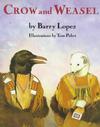
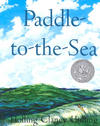
Paddle-to-the-Sea by Holling C. Holling, I love that book! The other children's book that isn't really a children's book that I really like is Crow and Weasel -- it's my favorite book by Barry Lopez. It's just terrific and it has wonderful illustrations.
Rowing to Latitude
A January/February 2002 Book Sense 76 pick
"In elegant prose, Fredston talks about the 15 years of rowing in the Arctic she and her husband have done. Her descriptions of the land are superb, her insights into the risk in this type of travel are deeply thoughtful, and her adventures are downright incredible. The book you can recommend to anyone, but especially women, looking for a well-written wilderness/adventure book."
- Barb Wieser, Amazon Bookstore Cooperative, Minneapolis, MN
Those bookstores:
- Capitola Book Cafe, 1475 41st Avenue, Capitola, CA (831) 462-4415 (website)
- Chinook Bookshop, 210 North Tejon Street, Colorado Springs, CO (719)635-1195
- Cook Inlet Book Company, 415 West Fifth Avenue, Anchorage, AK 800-240-4148 (website)
- Gulliver's Books, 3525 College Road, Fairbanks (800)390-8999
- River City Books, 43977 Sterling Highway, Soldotna, AK (907)260-7722
- Third Place Books, Lake Forest Park Towne Centre, 17171 Bothell Way NE, Lake Forest Park, WA 206-366-3333 (website)
Author photo by Gaspar Tringale.