
Glen David Gold
Interviewed by Gavin J. Grant
Glen David Gold's Carter Beats the Devil (a September/October 2001 Book Sense 76 Pick*) melds history and fiction to produce a page-turner of a first novel. Besides the great story, Carter has three color plates of magician's posters from the 1920s. We talked to Gold about the intersection between history and fiction, stage magicians then and now, and the possibility that he would quit writing and take up magic.
BookSense.com: When did you first become interested in Charles Carter?
 Glen David Gold: My father bought me the magic poster that is now (with some Photoshop adjustment) on the cover of my book -- this would be in...um...1991. I really wondered who this "Carter the Great" was, and when I found out he'd lived in my old neighborhood, I was hooked.
Are you a magician, or did you learn to do magic?
Nope and nope. I tried, when I had writer's block, to do the T. Nelson Downs coin roll, but I find my knuckles are as pliable as fried chicken wings.
Do you know any magicians? What did you do, or what books did you read, to help get over the feeling of a practicing magician's life?
Ha -- sneaking in two questions at once! Before I finished Carter, no, not a soul. And none were interested in meeting a non-magician who was writing a novel about a magician. Since then, magicians have welcomed Carter onto the shelves -- I spoke to 800 magicians in Las Vegas recently, and it was great fun.
It took me about four years to start a library for the life of the working magician. Some of the books I mention at the end of Carter, but I'd also add My Life of Magic by Howard Thurston, A Magician's Swan Song by Will Goldstone, and Memories by Augustus Rapp, and Nightingale the Mystifier's Magic for Magicians.
What was your speech about?
I told them how, as a non-magician, I'd managed to figure out how everyone performed their illusions. The great fun behind that, of course, was having scores of magicians asking me, "How the hell did you do that?" It was one of those peak experiences, like bungie jumping, that leaves you different (taller?) than when you started.
When you're in Vegas, do you go and see the magic shows?
The convention itself had numerous informal and formal shows included -- so I saw some great close-up and full-scale illusions. But no, I didn't go see the Big Guys in theaters. I've only seen two modern evening-length shows: Copperfield's and Ricky Jay's. It doesn't take any great courage to say I liked Jay's better than Copperfield's -- even his admirers say I saw a lesser show.
How would you compare Carter to today's stage magicians like Siegfried and Roy, or Penn and Teller, or Ricky Jay?
 From the audience point of view, Carter had far less competition (television, for instance, or ILM's digital effects, or the Internet) in the amazement department. And the crowds had more patience for a three-hour show with lots of personality in between. The three acts you mention are all products of their time -- spectacle, post-modern humor, and education-oriented, if you catch my drift. Carter's appeal was probably broader, but the audience wasn't as segmented as it is now.
What kinds of tricks are your favorite?
The ones that surprise me. Where you think you know where it's going and it suddenly changes, 180 degrees, against expectation. For example, Copperfield -- the only effect he did that I loved was what looked like a standard escape: buzz-saw coming towards him, he's trying to pick his way out of the locks, the time on the clock is running out -- and then you see him drop his lock pick! He frantically tries to get another one, but then -- SHOOOOM -- the buzz-saw cuts right through him. I can guarantee you no one in the audience saw it coming. Very nice indeed.
Are all the tricks in the book real, or were you able to invent any of your own?
After I'd been studying the principles for a while, I tended to either borrow actual illusions or combine them or re-present them in ways that would work, technically speaking. Sorry, that isn't very articulate. What I mean is: the illusions were all performed, or illusions with the same principles were performed. A few of them, toward the end, rely on the unpublished notes of David Devant, Servais Le Roy and de Kolta, meaning that they'd prepared them but never executed them due to cost, complexity, and so forth. Luckily I had a different budget than they did. And of course I tried to keep the illusions flowing thematically, so they would serve the plot and the character, so the illusions changed somewhat in that regard.
How much of the events in the novel are real? For instance, did President Harding attend Carter's show?
Lovely question -- how much is real, how much is illusion -- reminds me of sitting in the audience, watching a woman float by overhead and wanting to ask the magician how he did that. I'm so glad you asked, and is that the time already?
Have you ever seen a woman float by overhead?
In the mid '80s. I should never run for President, I guess...
At Carter's show in San Francisco, was President Harding in the audience? (Hoping you don't notice repetition of question. You did? Oh well...)
 So -- let's get down and dirty here. Excuse the prolixity, but if ya wanna know, I have to give you the whole enchilada. The reviews of my book have mentioned how I use plain language to tell the story, and when I see that, I feel like I've done it right. I'm intrigued by the process of suspension of disbelief. How, when you begin a novel, you have to come to an agreement with the writer that slowly, eventually, you'll become absorbed into his work and not argue with it. I think this is called the diagetic effect -- the process of being absorbed into a story. But you do fight it sometimes -- those places where you wonder if something is autobiography, or it rings untrue, or feels forced.
I noticed that with non-fiction, you don't have those arguments so much. You might have the Chomsky questioning of a writer's motivations and blind spots, but generally speaking, you just don't bump up against facts and challenge them. You don't suspend your disbelief -- you accept from the beginning.
 I tried to apply the non-fiction voice to Carter to see if I could write fiction and yet subvert the traditional diagetic (boy, I hope I'm using that word right) effect. Given that, I'll tell you a story: when I turned in the first chapter of Carter, my writing workshop leader (who will remain nameless) had a very spartan view of historical fiction. She felt that you had to research everything, make up nothing, that you should only fill in the small blanks between empirical facts; otherwise, villagers would hunt you down and burn you at the old windmill. You get the idea? After we workshopped the first chapter, she turned to me and said, "The parrot. Is the parrot real? Or did you make it up?" (This would be the flightless parrot in the "Overture" to whom I compare Harding.)
I asked her if it seemed real to her, and she said that wasn't the point -- she just wanted to know.
I had a revelation at that moment: her point about making up as little as possible was thoroughly bogus. The actual rule was: every bit of fiction has to feel real, regardless of whether it is real. So if she believed in the parrot, that was good. If she didn't, then it was bad. Its actual status on God's green Earth was irrelevant. I told her that her question was flattering, but all that mattered to me was whether it felt real.
"Just tell me -- is it real?"
So I told her, finally -- yeah, it's real.
And she looked...dissatisfied...and went back to the crit.
 What I took away from that was a determination to not answer the "is it real" question, not so much to protect the book as to protect the reader. Remember when Carter dismantles the vanishing elephant trick for Borax? And how Borax is ultimately disappointed? See, you find out that a favorite bit is real, and the reaction has to be, on some level, "Oh, the author lacked the imagination it would take to create something so good," or the bit is fictional, and it's, "Damn, real life isn't as good as I want it to be." Either way, you've peeked behind the curtain and the glance has pulled into component parts some aspects that just shouldn't be rended.
The grumpier side of me adds this: it took me five years to write the book, and 90 percent of the stuff I researched wasn't in books -- I invite people who want to know what was true to please, by all means, get to the San Francisco public library and look at the microfilm for the Call Bulletin, Examiner, and Chronicle. It's all fascinating stuff. Your documentation is all there.
So do the people at the public library miss you? Or are you still investigating things?
Hey, who wouldn't miss me! My favorite guy in Oakland, Bill Sturm, retired earlier this year -- I missed him when I went to the library, but left him a book. And, yeah, I'm still looking stuff up, some of it for the next project, some of it just because I love research.
Was there anything you really wanted to include in Carter, but couldn't?
 Hoo-boy. Yeah, here's a story: the San Francisco Chronicle gave me a...um...grudgingly positive review in which they said there's a thing called Kitchen Sink realism, like Ray Carver, then there's Carter, which was "everything but the kitchen sink" realism, and so I wrote the guy a nice email saying that, respectfully, there's a kitchen sink on pp. 204-205 of my book. Still, you can't put everything in. I so, so, so wanted to include the United States invasion of Russia (no, really -- Project Arcangel, executed horribly, in 1918-1919), President Coolidge borrowing a dime from Colonel Starling, Mysterioso getting an evening in a brothel, and so much other stuff. Oh, Houdini meeting Farnsworth and offering him $800 for television. I liked that idea but couldn't figure out how to do it without Houdini taking the scene over. Since I'm a collector, I wanted there to be throwaway mentions of people tossing out Honus Wagner cards, signed letters from Houdini, etc., but it ended up being a lame running gag.
If anyone is obsessive about the book, I'll just add this: there's a character who is referred to at least twice, who has an occupation alluded to several times, but who does not appear in the text. I think this person will show up in my next book, because of a line of dialogue I keep hearing in my head that she wants to say.
What are you reading?
Not nearly enough. Research stuff, but I'm trying to read, for pleasure, short pieces by Edith Wharton (my wife's current fave), Russell Banks and William Trevor. I can't claim I'm too successful, but the books are on the shelf, taunting me...
Do you have a favorite bookshop?
Currently, Dutton's, A Clean Well Lighted Place[1], and Aladdin Books[2] are my faves.
If you worked in a bookshop, what books would be on your Staff Picks shelf?
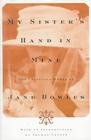
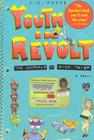
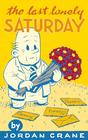 C.D. Payne's Youth in Revolt, which taught me never to fear plot; Richard Hughes's High Wind In Jamaica, which is so dreamlike and childlike and vicious and heartless and sweet I can hardly stand it; Jordan Crane's The Last Lonely Saturday, a wordless graphic novel that will take you 10 minutes to read, and which is painfully lovely; Jane Bowles's My Sister's Hand in Mine alongside Paul Bowles's The Sheltering Sky, because everyone should read them.
[1] A Clean Well-Lighted Place for Books, 601 Van Ness Ave., San Francisco, CA 94102 (415) 441-6670
[2] Aladdin Books, 122 W. Commonweatth Ave., Fullerton CA (714) 738-6115 Wed.-Sat. 11:00 AM - 6:00 PM
Carter Beats the Devil
* A September/October 2001 Book Sense 76 Pick
"You will be carried away by the clarity of the historical detail, the reality of the magic, and the warmth and fullness of the characters. Gold certainly knows how to grab and keep your attention until the last page. I will definitely suggest this book to all of my friends." - Andra Tracy, Out Word Bound, Indianapolis, IN
Glen David Gold received his MFA for creative writing at the University of California at Irvine and has written for newspapers, film, and television. He currently lives in Southern California.