
Nicola Griffith
Interviewed by Gavin J. Grant
 |
|
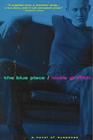
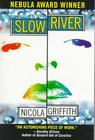
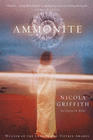
Nicola Griffith's latest novel, Stay, is a May/June Book Sense 76 Pick. Stay follows half-American, half-Norwegian ex-cop Aud Torvingen as she tries to disassociate herself from the world after her lover's death. Despite her inclinations toward solitude, the world will not let her go, and she soon finds herself as involved as she ever has been. Griffith's previous novels include Ammonite, The Blue Place, and Slow River. She is also the editor of a three-volume series entitled Bending the Landscape: Horror, Science Fiction, and Fantasy. Griffith's books have won the Lambda, Tiptree, World Fantasy, Nebula, and Spectrum Awards. Originally from the U.K. (hence the U.K. spelling throughout!), Griffith now lives in Seattle with her partner, writer Kelly Eskridge. |
 |
 |
 |
BookSense.com: In the last couple of years strong women protagonists have popped up everywhere in pop culture, from "Buffy the Vampire Slayer" to "Tomb Raider", whereas mysteries have always featured women (going back to Agatha Christie and Dorothy Sayers and forward to S.J. Rozan and Janet Evanovich). Can you comment on the new prominence of strong woman as lead characters in pop culture?
Nicola Griffith: Well, I'm embarrassed to admit I've never read any S.J. Rozan or Dorothy Sayers (and only two Agatha Christies in my teens). I didn't really discover mysteries until about ten years ago, and then it was very much the John D. McDonald/James Lee Burke/Robert B. Parker continuum, which gradually led backwards to Jim Thompson et al. I'm afraid I get bored of mysteries, per se, really easily, because so many revolve around the lone knight-in-shining armour narrator. This kind of figure is to a large degree idealised; they are the eternal hero with one tragic flaw (they drink, or they can't cope with authority, or their wife died young) to make them human. They don't learn and grow in any important way: their notion of love, or right and wrong, or how to operate in the world never deviate. They are complete and unchanging. That and the returning cast of faithful characters (not to mention the psycho sidekick who gets away with doing all the awful things the hero's not allowed to -- not if he wants to remain sympathetic to a genre audience) really make me feel claustrophobic after a while.
The crime fiction genre also annoys me because of its insistence on gender: male protagonists are constantly proving their masculinity, being manly men, or making witty comments about how they cook and know how to clean. Female protagonists are equally busy yelling at their loved ones about how they might be women, damn it, but just let them do their job. Of course, in a very real sense both the let's-make-amusing-comments-about-how-domesticated-I-am-even-though-I-have-a-thirty-inch-neck, and the no-one-realises-how-much-harder-it-is-if-you're-a-girl school of fiction were necessary as the intermediate stage of struggling with all those old gender expectations. Nonetheless, I find it all very frustrating because I don't think we need it anymore.
We haven't needed it in the visual media for a while, although of course TV and film (like comix) are expected to be more cavalier with reality; TV is fantasy, everyone knows that. Buffy and Xena deal with vampires and Greek gods -- their strength and competence aren't real and therefore can't threaten anyone.
I adored the first two seasons of Xena, thought it was the best thing on TV. Xena spent week after week saving the world on a regular basis, not for her children or parents or husband, but because she was Xena, a hero. And she enjoyed killing the bad guys (and eating, and sex, and drinking, and healing, and fishing). She enjoyed being alive, being a human being in the world. Her fatal flaw was that once upon a time she'd been Bad Xena, had enjoyed killing the good guys as well as the bad ones. It wasn't terribly deep but it was immensely pleasurable -- until, that is, they started being really inconsistent with the character's emotional arc, at which point everything went to hell (literally and figuratively). TV might be fantasy, but it should be consistent. However, at that point it didn't matter so much because by then Buffy had arrived in Sunnydale.
Given that Buffy is a TV series, with all the constraints that medium entails, I think Joss Whedon does a stellar job of maintaining depth and complexity in his character. Buffy is a serious creation: fun to watch, certainly, but dealing with subtle and complex issues: love, grief, life, growing up, responsibility and so on. (The beauty of the medium, of course, is that he is allowed to take hoary old metaphors -- when you fall in love with a guy and have sex, he changes -- and make it stunningly concrete.) Whedon is approaching the traditional territory of the novel (and you could argue he does certain things -- such as character development, particularly of women -- better than some novelists, for example, Dickens). It will be interesting to see where he goes from here.
I'm writing novels, and Aud is correspondingly more complex and textured. It's important to me, though, that she still be fun to watch.
In Stay and The Blue Place, Aud acts on the edges of most people's experience. Yet through her we can see what we might want to be, might have to be, given the right (often extreme) circumstances. Aud chooses her own fights, chooses her own morality. Is she just another lone wolf, is she a danger to society, or is she someone society can rely on to keep making the 'right' choices?
 Aud will never be called upon to save the world. She might be a hero but she's not a superhero. As you point out, all her fights are her particular fights. Her biggest fight, of course, is to not be constrained by her past, which is to some extent something we all deal with, individually and institutionally. In order to concentrate on the individual aspect, one of the techniques I use is something I've taken to calling reverse labeling theory. (Labeling theory is an old -- and intellectually shaky -- idea that can be simplified as: if you call someone a thief, and treat them like one, the social and psychological constraints invoked mean they end up behaving like a thief.) And so -- to take the most obvious example -- although Aud's a lesbian, she never thinks about it. She thinks about sex and love but not her difference -- at least not in terms of romance. Her difference and consciousness of it is concentrated in nationality -- she is of three distinct cultures and occasionally must deal with a multiplicity of identity -- not confusion, multiplicity. Similarly, there's no mention in the novels of the fact that being a woman is in any way incompatible with being violent.
Aud doesn't think of herself as a lone wolf. Wolves are pack animals; one on its own is a sad thing. Aud believes herself to be more like a jaguar and her singularity and autonomy to be natural, chosen. It becomes clear, I think, part of the way through The Blue Place, that she's an unreliable narrator: she is, in fact, far more damaged that she knows. But because in The Blue Place she thought she was happy -- and does, in fact, become happy -- she's not a danger, except to individuals who get in her way (and I think the same could be said for all of us, only less so). In Stay the situation is different: she truly is deeply unhappy, and just beginning to come to grips with what that means. It's a dangerous time for her and, consequently, those people who cross her path.
Aud takes a lot of punishment in this book, and makes more than one mistake which could be life-threatening. Is her loss of focus -- or, looked at another way, her burgeoning humanity -- a danger to her?
Jimi Hendrix's genius was his music. Marlowe's was his writing. When they got distracted -- by drugs or loneliness, by spying games or love intrigues (which story to believe?) -- they were at their most vulnerable. Aud's genius lies in her perfect understanding of and belief in her body. Getting distracted from that -- by very human self-doubt and grief -- will inevitably be dangerous, at least if she's not allowed to do what she needs to do, that is, to sequester herself while she sorts herself out. She's prevented from doing this in Stay, which leads to all kinds of trouble. She knows what she needs.
She's recovering, but she's still a bit frail. If she's left alone to heal, she'll mend. In that regard, of course, the author is god
Aud is so in tune with her body that it's a joy, an education, and a wake-up call to follow the way she thinks, feels, and acts. Given that people can live at this level of action, awareness, and joy, why are so many people uncomfortable with their bodies?
That, as the politician on air would say while sweat beads along his hairline and he looks about frantically for his handler to feed him a line, is a very good question. I think there are several answers, some (perhaps all) of which conflict.
One, living continually at that pitch, with the power gauge in the red zone, is not easy on any system, biological or mechanical. The human body is not designed for that kind of constant alertness. Two, having the awareness gate permanently jammed open is possible only if you spend a great deal of time utterly alone: away from other people, from danger (artificial or natural), and from other sudden change. In this culture, unnaturally stuffed with stimulus, information overload (the noise, colour, lights, smells of millions of people) would be catastrophic. (One of the (many) theories of autism is that those who are autistic are unable to filter their input, they can't tone down the information flow and therefore shut down everything in order to remain relatively sane.) This is less the case for Aud in The Blue Place because unlike most of us she is not also dealing with the fact that every single person she encounters is real, a living human being with a history and a future, their own individual way of being in and seeing the world. Meeting Julia, and Julia's subsequent death, brings the realisation home: everyone is different. Stay is partly about finding a balance between her old knowledge and the new. Three, knowledge can be frightening. We try to avoid the truth where possible.
 We spend a lot of our time lying to ourselves about what we can and can't do, know and don't know. We spend a lot of time lying to other people, and they to us. The body, though, isn't very good at lying. About 90 percent (some say 60, some say 95) of face-to-face communication is via the body; words are definitely secondary. Sometimes we'd rather believe the extra-somatic information (the TV weather report) rather than the somatic information (going outside and lifting our face to the sky) because that way we can pretend it really will be sunny tomorrow for the big picnic with our new girlfriend. Always facing the truth requires one of two things, absolute personal security or nothing left to lose (or at least a willingness to lose it all). Aud has always been able to face the truth the way she's been able to face violence, by holding mutually opposing beliefs: not only does it not matter if she loses, it's impossible for her to do so.
Aud loves life; it's precious to her. On one level she's unwilling to lose it, on another she doesn't believe she can lose it: she believes she's invulnerable. She's a pragmatist and a realist...yet hidden deep inside is this streak of idealism which often reveals itself as the need for order and structure. Deep inside, part of her -- despite all she's been through, all she knows, intellectually and viscerally -- still believes order and structure are possible.
I find it difficult to tell, sometimes, whether this is Aud lying to herself, or me lying to myself. As I said, this is an interesting question. I'll have to think about it a lot more before my answer can even approach coherence. In a way, I suppose you could say it's partly what the whole sequence of novels is all about, this attempt to integrate and understand the role of mind and body, the visceral and intellectual, practical and ideal -- even man and woman, urban and pastoral, self and other. It's all about rejecting binary opposites as simplistic fictions.
How much of Aud is wish fulfillment for you?
 Wholly, none at all, a lot, and not very much, depending on what part of her we're talking about. I think being six feet tall and enormously fast and strong and rich would be delightful. Being someone so divorced from herself would be a nightmare. Being someone from more than one culture, who sees the world in a particular light would be...well, it actually is true. Being someone only just learning to be an emotional grownup was true once, a long time ago.
Aud for me represents a sort of intensified, fictionalised, 14-steps-from-reality exercise in What If: What if I hadn't fallen in love when I was 15? What if I were six inches taller and didn't have Multiple Sclerosis? What if I were rich and Norwegian and, well, completely different?
Aud came to me in a dream -- one of those dreams where you're sometimes the person in the dream and sometimes an invisible observer. I was/was not this woman who killed someone without a second's hesitation. I woke up thinking, What kind of person could do that? How would they feel and think, and in what ways would they be similar to or different from me? I'm still trying to work that out.
Aud is almost completely alienated from her family, has some business contacts, and few friends. She relies on herself to provide everything. Is she human?
 That depends on the shelf life of previous experience. Do we need a constant fresh supply, or can we hoard it and eke it out day by day? Certainly, if Aud had continued the way she began, at the beginning of The Blue Place, she would have become a person I would have had a hard time liking -- and I believe it's imperative for a writer to love her characters. They don't have to be perfect, but they do have to have enough humanity to be empathised with. I worried, with that first novel, about treading the thin line between showing Aud as a deeply disturbing and occasionally unlikable person and making her utterly unpleasant. As it was important that the reader really believe she wasn't just another rogue with a heart of gold whose ultimate redemption is inevitable (it's not, not by a long shot). I couldn't afford to go too far towards the what-a-lovely-girl end of the human spectrum.
Aud did have love growing up -- from her father, when he was there, from her extended family, possibly from family retainers and certainly from friends. In fact, that's how we know she is human: she connect with people to the extent that they think of themselves as her friends.
In The Blue Place she didn't believe she needed friends, didn't believe that friendship is a two-way street. In Stay she's forced to face up to the fact that she does.
Many novels -- especially mysteries -- are the equivalent of 'comfort food' where the world is thrown out of order, then everything is fixed -- which never really happens. There are always loose ends, and the consequences of acts (of omission or commission) resonate for years within people (and groups). Will Aud look into the people she has killed in the past and see what she has done to their families and friends?
Although in some ways she's an idealist, in others she's very much a pragmatist (Aud rhymes with crowd, her name is Legion...) and I can't see her flagellating herself for what's already done. But what she's done will matter. It will continually influence her life: her attitude towards and treatment of Dornan, of Luz, of her mother, of Annie, of Julia, of Cutter, of Beatriz...she'll be reevaluating, reinterpreting, renegotiating (sometimes more successfully than others).
Comfort has its place in fiction as in food -- it's just not the place I'm working in. I'm not interested in writing fiction that reinforces a reader's worldview, that makes them feel safe. A good novel is not necessarily politically or stylistically radical but it does make the reader think; it moves a reader to wonder how things will all turn out, what they might have done in the character's place and how they feel about that. It does this by virtue of making the people and places and dilemmas real. The writer can't afford to use anything remotely resembling a plug-in (an un-thought-out genre convention, a cliche of phrasing, a stock character) and so must, instead, do the work: really go there, get inside the characters' heads and hearts and histories, smell the pebbles on the beach, feel the yolk between their fingertips, follow actions with consequences. If the fiction is dense and particular and clean then the characters and their story will matter to the reader. No matter how many times she reads the novel she will find interesting resonances; no matter how well he gets to know the work he will find unexpected spaces, room for him to do his own work and draw his own conclusions. This is the only way a reader can make the book their own.
As Aud realises other people are as human as her, will she reevaluate where she came from and how she came to be the way she is?
 For most of us, I think the realisation that other people are unique human beings, with their own concerns and joys and ways of doing things, comes in at least two stages. First there's the understanding that those walking talking things are actually feeling beings that exist outside ourselves: if you throw your building blocks at them they bruise, and then their mother comes along and talks to your mother and you don't get to play with the building blocks anymore. That usually happens about the time we're learning to put whole sentences together. Then there's the more subtle change, the one where we finally figure out that people who are more silly or serious, geeky or athletic, socialist or right wing, drinkers or teetotalers, monogamous or polyamourous, fond of blue or in love with yellow, are not just faulty copies of ourselves; they won't one day suddenly see the light and therefore naturally start liking the things we like or wanting the things we want; they're different. They began differently, exist differently, and are heading for different places. They not better or worse, just different.
I can't remember how old I was when I realised this but I do remember my shock; I felt like a moron because I hadn't worked it out earlier.
Aud is going through a much bigger upheaval: she's older, for one thing, and she's a much more extreme person in all respects. The way she views the world -- her past as well as the present -- is going through radical realignment. It's a bit like being a teenager, I think: rapid change, and no template for guidance because it's all new. Like an adolescent, she may do some odd stuff until she settles down. As a result of her changing so much, the voice and narrative structure of the novels also has to change. It's an on-going challenge. For example, the next novel, which doesn't even have a working title yet, will to a large extent use structure to reflect Aud's internal ambivalence. (Structure, in my opinion, is a vastly underused part of the writer's repertoire.)
Aud listens to and has a deeper appreciation of music than might be expected from a person in some ways so removed from the world. I know you were in a band a while ago -- is music still an important part of your life?
I'm not sure I agree with you on the "deeper appreciation than might be expected" part. I think music, like a cuddly toy, can be a great substitute for connection with the world, a kind of comfort. If Aud is removed from other comforts, maybe music helps. Deep down she knows what she needs, hungers for it.
Music comes and goes in my life. There are times when I'm listening to it constantly, anything from the Chemical Brothers (I'm listening to "Exit Planet Dust" as I type this) to Nina Simone to Albinoni to Hedningarna to Nina Hagen to Anonymous Four. There are times (such as last month and most of this) when I only hear music when Kelley puts on a CD while we eat breakfast on Sunday morning.
 I think it might have something to do with finding one's emotional place. Music, like scent (though to a much lesser degree) is evocative, it reaches inside you and plucks at something -- enlarges and amplifies it -- and says, See, this is how you feel right now. When I'm in the thinking stage of a novel (as I am now) I roam my emotional and intellectual landscape, ranging here and there, foraging through old bits and pieces and newly discovered patches, snuffing, munching, ruminating briefly, but always moving on. Music is a bit and bridle at a time when I need an absolutely free rein. On the other hand, when I'm actually working on something, when I know where I'm going, music can spur me to greater effort, pumping me full of energy or laying out a wonderfully pure template, a guide for me to follow to the place I want to go.
In fictional terms it can be an effective signpost: Any reader who knows Diamanda Galas and Nina Hagen and Nina Simone and Skunk Anansie knows that any character who listens to a fairly steady diet of such things is primed for...something. Something intense, extreme, and very possibly frightening. It adds a layer.
Actually, I've been toying with the idea of putting together an Aud playlist, several playlists, to match her modes: when she's gearing up, when she's utterly relaxed, when she's feeling culturally legion. Maybe I'll make some song clips, stick the mp3 files on my website.
Do you still teach writing?
Yes. I'll be teaching the first week of Clarion West this summer. I love to teach; there's nothing quite like seeing that "Eureka!" look on someone's face when the penny drops. I also get a great sense of satisfaction from knowing I've shortened someone's learning curve. I don't think there's any writing course or workshop in the world that can turn an untalented person into a great writer -- you either have it, or you don't -- but it is possible to demonstrate a few shortcuts to those who have both the innate talent and the will to work. When I started out I didn't know anyone -- not one single person -- who was a writer so I had to learn by myself. Every time I didn't know how to do something I referred to a novel that did something similar and just puzzled it out. It's a frustrating way to learn; I wouldn't wish it on anyone else. By the time I attended my one and only workshop -- Clarion, in 1988 -- I'd done most of that kind of teachable learning.
You've lived in America for almost 15 years now, are you acclimatizing?
 My mother tells me I sound "just like an American" on the phone. When I go home to Yorkshire people furrow their brows and ask if I'm from Canada. Here in Seattle people beam and ask whereabouts in England I'm from. I'm very American in some ways, particularly when it comes to creature comforts. I hate going back to visit my family and not being able to get a decent mixed drink or good service in a restaurant (though things have improved dramatically in the last few years). I interact differently with strangers: am more likely to chat with servers and mail carriers, etc. I take travel for granted (60 miles in England is a long way, a drive not to be undertaken lightly), and the fact that everyone will, of course, have a phone and a car and a CD player and a decent computer with web access and email. And it's startling to see how rapidly things change. One time I had been away from the UK for about 18 months and on the second day back went to a wine shop. I handed over some notes in payment for a couple of bottles and got a handful of unfamiliar change back. "What's this?" I said, peering at it suspiciously. The woman behind the counter said, "Have you been in prison, luv?"
On the other hand, I'm still very English in the most basic ways: My attitudes to class and education and government and criticism and family and friends and beer and chocolate are indelible. I can change how I behave, but I can't change the first, instant internal reaction.
How do you like living in the Pacific Northwest? Is it a good place for writers?
In three very important respects it's a terrible place for writers: the cost of living is high; air travel is inconvenient; the people are so nice it's hard to resolve to ignore them while trying to write a novel. In all other respects, it's great.
You've edited three volumes in a series called Bending the Landscape. Do you find it easy to go from being a writer to editing?
 An editor (in my opinion) is not there to create but to facilitate, to help the writer clarify what it is she's after and to get there with precision and grace. It's harder for me to edit when I'm at the initial stage of creating a novel because when I look at someone else's work I want to take it and bend it to my creative goals; I start to reimagine and reshape. When I'm embarking on the fourth or fifth rewrite of that novel, though, I'm in analytical mode, and editing is relatively easy: I'm looking at what's there, more able to take the 30,000 feet view, see the whole laid out before me like a map. And it can be enormous fun. There's nothing like getting a sludgy fourteen thousand word mess in the mail and being able to help the writer lift a sleek and gleaming 6,000 word machine from the word swamp. Very satisfying.
What are you reading?
 I've just finished Glen David Gold's Carter Beats the Devil which I enjoyed immensely. I have a stack of dense, scholarly texts on the politics of conversion in Anglo-Saxon England to read next, and then I'm going to have to hunt for something about antique Japanese furniture. But I am oh-so-very-hungry for a good book. Maybe I'm just not looking in the right places but almost every book I pick up these days feels facile or boring or too cynical or badly-written or unremittingly grim, or all of the above.
Do you have a favorite bookshop?
 No, except in my dreams. Most book shops are too big for me: I walk in and immediately feel overwhelmed by the choice and bright colours. The small fusty shops with their first editions and rare books, on the other hand, trigger my allergies; after five minutes I feel as though I'm about to pass out. I like small places that, paradoxically, also feel light and airy and spacious. Probably the closest I've come to the perfect place is Charis Books & More in Atlanta; I could spend hours there, scrumming through the shelves. Lovely.
If you worked there, what would be on your staff picks shelf?
 I hate this question; my mind always goes terrifyingly blank. But, well, okay, here's a mix of admirable works, old favourites, and recent reads (not necessarily in that order): Gold's Carter Beats the Devil, Tipping the Velvet by Sarah Waters, A Blind Man Could See How Much I Love You by Amy Bloom, and Dorothy Dunnett's The Game of Kings. Fire From Heaven by Mary Renault, Michael Ondaatje's memoir Running in the Family, Mary Barnard's translation of Sappho, a selection of Mary Oliver's poems, the Patrick O'Brian Aubrey/Maturin novels, Joanna Russ' Extra-Ordinary People, and Tolkien's Lord of the Rings. Brazzaville Beach and Blue Afternoon by William Boyd, Oranges are Not the Only Fruit by Jeannette Winterson, and Barbara Kingsolver's The Bean Trees. The Oxford English Dictionary, which is probably my favourite book of all time. I spend hours with it. Lovely.
How has the book tour been?
 My favourite part of a publicity tour is always the readings. I love to read out loud, to get out in front of people and watch them close their eyes while I introduce them to the place and people I've lived with for the last two years. It satisfies the part of me that's a performer. The best part, though, is the Q&A afterwards: I get to watch readers' minds work, to learn how they form their opinions about my characters, and what changes their minds. Their questions force me to constantly rethink my own assumptions and beliefs -- about writing in general and my own work in particular. Absolutely invaluable.
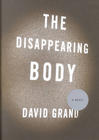 What made the process even more interesting than usual this time was that I was touring in California with other Nan A. Talese authors, David Grand (The Disappearing Body) and Todd and Linda Shimoda (The Fourth Treasure), and our editor, Sean McDonald. Obviously, we'd all already met Sean but the first time Todd, Linda, David and I met was 10 minutes before the first gig, at Capitola Book Cafe. It's weird to be dealing simultaneously with performance adrenaline, making friends with fellow authors, saying Hi to an editor you haven't seen in months, meeting bookshop owners, wondering who that very familiar woman in the audience is, and trying to sort out a plan for the evening: How long would we each read? Who would go first? Would Sean introduce us, or the events coordinator? etc. Even so, it went pretty well. The next night, though, we'd all already met; we knew what we were doing; we had a good crowd at A Clean Well-Lighted Place*. As writers, Todd, David, and I are pretty different, and Linda is an artist and Sean an editor, so although many of our concerns are similar, many of them are subtly different. Our audience seemed fascinated by the ability to ask one question and get answers from five perspectives -- and to watch the five of us discovering this about each other at the same time and being interested in each others' process. If the booksellers hadn't called a halt, I think a couple of the sessions might have gone on for hours.
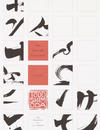 For me (and, I'm pretty sure, Todd and Linda and David) it was very cool to meet authors from the same imprint; we got to share a lot of useful information. I think Sean found the mechanics of the book tour interesting, too; sitting in New York looking at a paper schedule differs radically from doing the actual flying and driving and reading and signing and searching (hopelessly) for a really good cup of tea.
What a tour (and website, and listserv, and bookclub, and literary magazine) does -- what it's for, as far as I'm concerned -- is to foster community: between writer and reader, bookshop and customer, writer and bookseller. It does this by not only bringing the writers into the store where readers and booksellers can talk to them, but by triggering a wider awareness in the area via interviews, reviews, and features in the local media. It's only a small step to broaden our definition of community to include the writers and readers of an imprint. Nan A. Talese is an imprint that is small, focused and, paradoxically, varied. Its great strength -- its brand identity, if you like -- is that its name is synonymous with quality. The publicity opportunities of an expanded community effort would be amazing. If I were Empress of the Universe, I'd organise an annual weekend retreat for all the imprint's sales, publicity, marketing, and editorial people, plus that year's crop of authors. As writers (and performers), we have different strengths, and our books have different needs, but there are vast opportunities here for cooperation and teamwork. Our tours could be tailored to our strengths, individually and collectively; we could find ways to support each other, get an idea of when and where to team up for maximum effect.
There could be the Non-U.S.-Citizens set of Talese authors talking about writing and art and alienation (or whatever). There could be the Is Literature Different on the East Coast mini-symposium. Or the Gee, Isn't it Interesting How Each of These Novels is Really About the Role of the City in Twenty-First Century Society subset. Even the I've Won The Booker Prize and He's a Brand New Author But Here's How Our Work is Similar sort of thing. And so on. This cooperative teamwork would not only kickstart publicity efforts but could also help with the crushing fatigue and weirdness of touring: mini-celebrity one minute, absolute anonymity the next.
On our home turf, too, we could do a lot to help each other. Writers are usually familiar with their local bookshops, booksellers, and book journalists. It wouldn't be hard to chat to a buyer or events coordinator about the visiting Nan A. Talese writer, or to mention that writer's name (and book title) to interviewers and feature editors. When it comes to book sales, word of mouth is king. Sharing information is almost always a good idea. I think we'd all do better if we stopped treating this business as a competition. It doesn't have to be.
Author photo by Kelley Eskridge.