
Eva Ibbotson
Interview by Gavin J. Grant
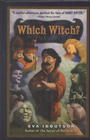
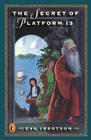
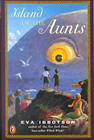
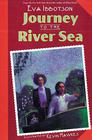 Eva Ibbotson has long been a favorite of both children and adult readers, as well as independent booksellers. A number of her books have been selected for the Book Sense 76, including Which Witch, Island of the Aunts, and her latest novel, Journey to the River Sea.* Her other novels include The Secret of Platform 13, and a number of books written for adults: A Song for Summer, Madensky Square, A Countess Below Stairs, and A Company of Swans.
Since she lives in England, we interviewed Ms. Ibbotson by email. During the interview (which was conducted at a comfortable and stately pace), she had to take a few days off to go London where her Journey to the River Sea was awarded the Smarties Prize -- a big annual prize sponsored by a candy company in the U.K. Ms. Ibbotson said that, while she was very happy to receive the award, unfortunately she is not sure if anyone heard her thank-you speech as she mistakenly held the microphone upside down during it! We had no such problems with communication here…so without further ado, here's our interview:
BookSense.com: When did you start writing?
 Eva Ibbotson: I wrote stories and poems when I was a little girl -- in German to begin with because we lived in Austria then, and in English when we emigrated to Great Britain. During my school days I only wrote the essays and stories we were set for class -- though I always enjoyed doing them. Then there was a long gap while I took a science degree and started a family. When I was 30, we moved to a northern industrial town and to cheer myself up I started writing stories for magazines. Since these proved easy to sell and fitted in with child-rearing, I went on writing for magazines till my four children were all at school.
Why did your family emigrate to Britain?
My father was offered a job in the University of Edinburgh. But we would have had to leave soon afterwards in any case, because he was partly Jewish. We were lucky to be émigrés rather than refugees.
What kind of science did you study? Have you ever had a chance to use it in your books?
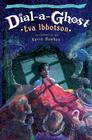 Physiology. It was rather a messy science in those days, and not very useful without medicine, and I was glad to give it up when I started my family. But I do use it sometimes in my books...for instance, in Dial-a-Ghost, where the sinister Dr. Fetlock has a lab for getting rid of ghosts.
Have you always written children's books?
I started as a short-story writer and I was over 40 before I wrote my first full-length book. It was a book for children: The Great Ghost Rescue. Since then I have written children and adult books alternately.
Which is more fun, writing children's books or writing romances?
I find it hard to say -- both are fun when things are going well, and horrendous when they aren't.
What's the difference, for you, between writing children's and adult's books?
 There is less difference for me than one might think. I try to imagine an actual person I am trying to entertain, whether a child or an adult, and write directly to them, rather than to a general reader. Children's books are easier only in the sense that they are usually shorter. And of course, one is particularly careful when writing for children to keep things moving and not get bogged down by sunsets or moral "asides." With both kinds of books, it is finding the voice in which to narrate that is the problem.
Do you read a lot of children's books?
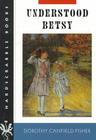 Yes. I am never without a children's book on my bedside table, especially the old fashioned ones. On the night of September the 11th I read Understood Betsy, a marvelous book by Dorothy Canfield Fisher about a little girl going to a farm in Vermont.
Are you still writing books for adults?
I wrote my last book for adults, Song for Summer, four years ago. Before that, I used to write books for adults and children alternately, and I found that this worked well. But after my husband died, I found myself turning more to children's books, and the book I'm writing now is once again for children.
Are you fond of traveling? Are there places you've been that you think are just the best places in the world?
 I used to like traveling better than everything, but I can't do so much of it these days. My special places are usually warm and lush with masses of flowers; the Canary Islands before they were spoilt, the Mediterranean...the southern parts of Austria where you get mountains and vineyards together. There is a little town in the Dolomites in Italy that has it all -- I always mean to write about it.
If you had your choice when traveling, what mode of transport would you use?
Train every time! For years I dreamt of traveling across Russia on the Trans-Siberian Express, though I'd have settled for the Orient Express to Turkey.
When you go to a new place, what do you do first? (Besides check into the hotel!)
Nowadays I have a hot bath and go to bed! But when I was younger I always went to look for water; a river, a pond, a lake, the sea...
Where have you enjoyed living most?
Probably Cambridge, (England), a beautiful university town with a peaceful river, lovely gardens and, of course, superb libraries. Also, I met my husband there...
Your children's books are filled with magic, witches, disappearing islands, and other wonderful stuff.
 Yes. I wanted to write a book about funny devils that got into people and made them do strange things. ([I was inspired by stories such as the] man accused of murdering a South African politician who said he had swallowed a giant tapeworm who made him do it.) But then came all those films like "The Exorcist" and I drew back.
Have you, or anyone you know, ever seen a ghost?
No, I have never seen a ghost, and nor has anyone I know. But when I used to go and talk to children in schools and ask those who had seen a ghost to put their hands up, I always found that at least half the class responded.
What kind of research did you do for your latest book, Journey to the River Sea? Did your physiology background help?
 I read books, looked at pictures, watched films and videos of wildlife, talked to travelers, and tried to learn some Portuguese. There was a lot of historical research to do on the rubber boom, which brought the settlers to the Amazon at the turn of the century.
I think being married to a naturalist (who kept an ant nest under the bed when I first met him) was more important than my own physiology background -- physiology is more about the insides of animals, not their habitat and habits. Usually I go to the places I write about, but Manaus has changed so much that I decided to keep it in my head.
Are you continuing to write magical books? Or are you tempted to do more historical books like Journey to the River Sea?
 I seem to be writing another book set in the past with real characters rather than wizards and witches. I don't quite know why this is; maybe the immense success of Harry Potter has made me feel that one can't go much further along that road for the time being.
If you worked in a bookshop, what would be on your staff picks shelf?
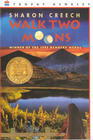
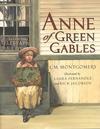
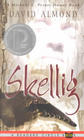 I would put all the books by Frances Hodgson Burnett, Daddy Long Legs by Jean Webster, Anne of Green Gables, all the books by Virgina Euwer Woolf, Skellig by David Almond, Walk Two Moons by Sharon Creech...and of course my own books, because I like to eat!!!
Do you have a favorite bookshop?
There is a secondhand bookshop in Alnwick, in Northumberland, called Barter Books. It is adapted from an old railway station and has every book you could want, as well as an open coal fire and muffins.
*Journey to the River Sea is a January/February 2002 Book Sense 76 pick
"A great adventure story set in England and Brazil that includes all the classic elements: an orpahn heiress, repellent relatives, a stern but good-hearted governess, and friends in unexpected palces. Yet they are woven together in fresh and delightful ways."
- Rachel King, Little Book House of Stuyvesant Plazaz, Albany, NY