
The Future of British Fiction is Getting Weirder
An Interview with China Mieville
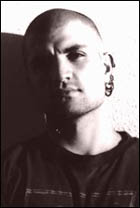
by Gavin J. Grant
 |
|
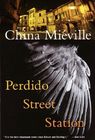
China Mieville's third novel, The Scar, hit bookstore shelves this summer, following hot on the heels of his breakthrough novel, the fantastic, phantasmagorical Perdido Street Station.
|
BookSense.com: When did you start writing fiction?
Pretty much as long ago as I can remember -- certainly from the age of about 10 onward I wanted to write stories and have as many people as possible read them. It was in my early 20s that I tried to get serious about it.
Were you always attracted to the more fantastic types of fiction?
Yes. These days I read outside the genres as well as within, but fantastic fiction is my first love, and it's where I always come home to. At its best, I still think it's the very best stuff out there. Even though these days I can really enjoy a good non-fantastic novel, I can't gear up the energy to actually write one. I'll be surprised if I ever write anything of any length that doesn't have a fantastic or science fiction element.
Is there any other career that you are tempted to try?
As a young teenager I really wanted to be a marine biologist. I finally learned to Scuba-dive recently, which is the best thing ever. I may eventually idly try to do some marine researches, but my science is very weak.
More recently, I always thought I'd be an academic -- that's why I finished my Ph.D., so that I could pursue that option if I wanted to, and if the writing didn't take off. I still enjoy research.
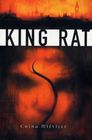 King Rat, your first novel, was set in contemporary London. What do you gain by introducing fantastic elements into daily life?
Well hopefully you get that classic uncanny -- the 'unheimlich', which is simultaneously recognisable and alien. That's the coolest kind of aesthetic response you can get, because it's the most alienating, the most unsettling, the most radical and the most interesting. It's what the Surrealists did in their way, and what we -- fantasists I think of as the pulp wing of Surrealism -- try to do now.
Your novels are sometimes described as grotesques. What's a grotesque and are you writing them?
I certainly see myself as writing in a grotesque tradition. Of course, it's nigh impossible to actually define, but my sense of it is a reconfiguration of the familiar into a kind of combatively alienating experience. A woman is familiar. A beetle is familiar. A woman whose head is a giant beetle is grotesque. A lot of genre fantasy has recycled its own tropes so much that its stock characters and cliches are familiar -- centaurs, for example, cool as hell as they may be, aren't grotesque these days, at all, and elves and dwarves are positively camp. I like the grotesque because its ornery, and also because it tends to be more grittily corporeal -- gross, physical, fantasy. Materialist, philosophically speaking.
You toured the U.S. and Australia earlier this year for The Scar. Was that your first U.S. tour? How did it go?
I did a sort-of U.S. tour for Perdido Street Station, but it only involved one public reading. This was the first time I'd done a big, proper tour. I had a cool time. I'm always very impressed with the seriousness with which people read Weird Fiction. I can never quite believe that people are actually turning out for these things, so I took to bringing a camera, and taking a quick photo of the crowd before each gig. To which people generally responded with very good humour. However, I got nervous because I realised it looked like a fairly craven piece of crowd-pleasing. But dammit, I just wanted it for my records! And there was no corollary between size of bookshop and size of crowd -- some comparatively tiny places pulled together some brilliant numbers.
Is there a difference between the ways U.S. and UK readers react to your books?
It's very difficult to generalise, but there seems to be slightly more of a non-generic audience in the U.S. than in the UK. I've been lucky in both countries, in that I've not had readers restricted to the traditional science fiction audience, but it seems to have broken out a little more in the U.S.. But then, it's early days.
Apart from that, no, I've not noticed any differences in particular. There are certain assumptions -- stereotypes -- which are often bandied about: U.S. audiences are less forgiving of "downbeat" books, they don't like things that are too "British" -- but I've seen none of that in response to my stuff.
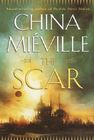 The Scar is full of inspired physical descriptions, especially of places on the edges of the world. Were there any places that inspired you?
Learning to scuba-dive was very influential for all the submarine stuff. And I spent some time looking at old ship-building yards on the south coast of England.
The world in The Scar was long ago wounded (literally scarred) by people who attempted to use power that was out of their control. Is The Scar a political allegory?
I think that all science fiction or fantasy has inevitably allegorical aspects, but I also think it's important not to suggest that that's what the book is "about": you have to give the fantastic permission to be its own end, to follow its own dynamic. Of course, that doesn't mean the allegorical stuff isn't there -- clearly it is. However, I try to avoid the moral that you shouldn't Meddle With Powers You Can't Possibly Comprehend: it has become a pretty trite and conservative idea, I think. Instead, the political allegorisation in The Scar is about more specific things like the dynamics of maritime imperialism, mercantilism, competing systems of political powers, that sort of stuff. But never at the expense of the monster story, hopefully.
Are you scared of anything?
Unbridled imperialism. And sharks.
Did that help while writing?
Hell yes. I didn't really know I was scared of sharks -- I'm fascinated with them too, I love drawing them and watching documentaries about them, but then someone pointed out that this was a completely neurotic and terrified obsession. And sure enough I have nightmares about them fairly regularly. I'd love to see one while diving. But I also think it would haunt my sleep for years.
The monsters of The Scar and Perdido are wildly imaginative -- mosquito women, monsters big enough to pull islands, lobster men -- is there anyone you sit around and discuss monsters with?
I dearly wish there was but not really. I mean, when I think of a particularly vivid one I run and tell Emma about it, but monster-dreams are for me a primarily solitary activity.
What's your favorite monster?
How cruel to make me pick one. You really going to make me pick one? I have always felt particularly close to "The Creature From The Black Lagoon."
Are you inspired by monster movies?
So much. I fucking love them.
 Do you think anything has changed after the anti-corporate/World Trade Organization protests in Seattle?
I think plenty has, both for good and ill. The anti-capitalist movement has matured, has grown more sophisticated, more theoretical, politically harder. There were hundreds of obituaries of the movement after 9/11, and they've all been proved wrong -- my partner just got back from Florence, where more than half a million people marched through the city against war with Iraq, and that anti-war sentiment was explicitly linked to the grass-roots anti-capitalist activism of the European Social Forum which took place in the city at the same time.
I think the movement is facing up to the accusations that it has been reactive, or that it has not put any alternatives, or that it doesn't have a theory or a political program. These accusations were always canards from the right, but now they've become completely ridiculous.
So in short -- at the official level, you've had the acceleration of imperialism from Bush and his Oil-ocracy, along with pathetic violent toadies like Blair, and at the other end the grassroots movements for social justice have got more and more exciting. As the economic crisis continues to bite, the choice is going to get starker and starker: their way of profit-mondering mass death and misery -- or our way.
Is there a system of government you admire and respect?
Not so much. Of course there are variations, and I'm not an idiot -- of course I'd rather live in a democracy, however flawed, than a dictatorship. But the supposed "socialism" of Cuba, for example, or China, let alone North Korea, I think have very little to do with the grass-roots democracy that I consider socialist. But of course there are moments throughout history which provide me with 'systems of government' I find inspirational. Above all, the early years of the Russian Revolution. Though it was crushed by international isolation and civil war, at the start it was the most amazing explosion of popular power, creativity, artistic and political and moral unshackling and experimentation.
Why did you run for parliament?
Because in the UK the Labour Party has moved so openly and far to the right that there was no alternative being put to the agenda of privatisation, kowtowing to big business, scapegoating immigrants, putting the squeeze on the vulnerable, attacking trade unions, and so on. We stood much as Nader and the Greens stood in the U.S. -- though we in the Socialist Alliance were on a much more overtly socialist platform -- to pull the debate, to argue that there was an alternative agenda. People have been disenfranchised by the rightward gallop of the supposed "left" parties, and we insisted on putting an alternative.
What are you working on now?
A new book set in the same world as Perdido Street Station and The Scar.
What are you reading?
Loads of stuff -- like a lot of people, I generally have a few books on the go at the same time, and I read them in dribs and drabs. A book about the artist James Ensor. Brian Stableford's Werewolves of London trilogy (The Werewolves of London, The Angel of Pain, The Carnival of Destruction) because I only read the first one before. A history of Russia by Mike Haynes -- called Russia.
What was the first book you remember buying?
Grinny, by Nicholas Fisk. A children's horror/sf novel that was fucking brilliant.
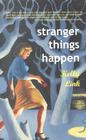 If you worked in a bookshop, which books would be on your staff picks shelf?
Kelly Link's Stranger Things Happen. Also, Anticapitalism: A Field Guide to the Global Justice Movement, edited by Emma Bircham (she's my partner, so this obviously looks like nepotism, but I honestly think it's a completely invaluable book about the post-Seattle social movements). M. John Harrison's new science fiction opus, Light.