
| Why I am Not Postmodern |
|
| Maureen McHugh |
 When I was in Mr. Fish's class in fourth grade class at St. Columban, we had a mock election for President and I voted for Nixon. He won by a landslide. Granted, that was the year Nixon was re-elected in a landslide, but I proffer this bit of personal information as evidence that I am, at heart, a rather conservative person. I don't want to be a conservative person. Studying literature and art, it becomes very clear that the really good writers and artists, the really important ones, are not conservative people. They are the people who institute change. Who make us see and think in different ways. So much of my life has been an effort to somehow convert myself from a mildly anxious, essentially conservative Catholic school girl into a radical, free-thinking writer.
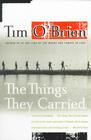 With this in mind, I recently took a class at the University where I teach, a graduate class in Modernism and Postmodernism. I like some postmodern works quite a bit -- particularly The Things They Carried by Tim O'Brien; the flawed but tremendously interesting novel Infinite Jest by David Foster Wallace; and Motherless Brooklyn by Jonathan Lethem. (I know Jonathan from his days of slumming with science fiction people, so he is my brush with the glittering circle of literati.) I thought I had a sense of what postmodernism does in literature--that it draws attention to the fact that a text is written, made up, an artifact. In The Things They Carried there is a character named Tim O'Brien and he both narrates the story and acts in it. But his narration makes it really clear that some of the things that happened to the character Tim O'Brien never happened to the writer Tim O'Brien and that, in fact, this whole book is a lie, a work of fiction, perhaps based on the real wartime Viet Nam experiences of the writer.
I liked that a lot. I suspected I liked it because as a writer I was really familiar with the way that once I took a piece of my own experience and wrote it into a story, then trimmed it, the way you trim a hedge, it became harder and harder for me to remember later which was the made-up version and which was the memory version. And I knew that memory was flawed anyway. I am forever remembering things that I am certain were this way -- the painted mallards mounted on the wall of my sister's house in 1970 that I remember so vividly didn't actually exist until maybe 1975 when they had moved to the bigger house in Springboro. So memory is malleable, fiction is malleable. The truth will not stay fixed.
That seems very postmodern, doesn't it?
I figured I was a shoo-in for this postmodern stuff.
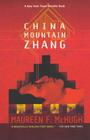 I didn't actually write this way. My characters have faulty memories, but that's not because they are postmodern, that's because they are something much older than that, unreliable narrators. My characters are sometimes forgetful, always biased, but always in an attempt to mimic human failings, to let you pretend, dear reader, that they are real. That you might walk down the street in New York City and see Zhang, the Chinese-American guy from my first novel, window shopping in the Village. Zhang has never once stopped to suggest that he is a concoction of evocative descriptions, a handful of sentences, that you are in fact taking a bunch of random shapes (26 of them) and decoding them the way a telegraph operator decodes Morse Code into a voice in your head -- since I assume that you are not reading this aloud although I won't mind if your lips are moving -- and without ever having heard that voice out loud. Furthermore, Zhang has never even pointed out that you don't really know that much about him, that the things that you think you know about him -- that he is neurotic, generous and a little vain -- are based on one or two things. I don't tell you most of the everyday things about him. I don't even tell you the date, although often I tell you what day of the week it is. I don't think it matters. I count on you to go along with me. I count on you to be seduced by what is there. I want you to pretend.
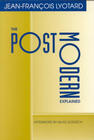
 So I take this class and I have this suspicion it is going to be about the bones of things. I assume that it will say, "Look at what you pretend." The first thing I read for the class is Jean-François Lyotard's opening essay to The Postmodern Explained(1), a shimmering chimera of an essay which is really a letter full of sentences like "The first hypothesis, Hegelian in inspiration, does not call into question the notion of dialectically totalizing experience." I haven't ever real Hegel. Or Heidigger or Descartes, or, if you want to know the truth, Plato or Aristotle (and if I wasn't taking the class with at least two graduate students who had taken my class and who I knew to be quite sharp but not, you know, astonishing in the way, say, Samuel Delany is astonishing, I might have quit at that moment). Instead, I hoped that by the end of the class that sentence would actually mean something to me.
 In class, we started with, of all things, a linguistics text. Linguistics is interesting, but difficult because a lot of linguistics involves skills that have to be learned the way you learn a musical instrument or a language, by lots of practice. This text, Ferdinand de Saussure's Course in General Linguistics assumes you are pretty good on grammar in German, French and Latin. I'm not. But that was okay because all that grammar was going to illustrate a point that makes a lot of sense if you're a writer. (Or maybe it doesn't. It made a lot of sense to me, but every time I read that writers are good at something, I'm not, and life is too short.) De Saussure had a couple of points to make about language, one of which was that if you don't have words for it, you probably can't think it, and I believe that. The other was that words are arbitrary noises, signifiers, that we attach to meanings, the signified.
There is a kind of athleticism of thought, a kind of extreme thought. Philosophy is one of the events in the Olympics of thought. Postmodernism is a kind of thought aerobics for me. Reading these texts was like doing long division in my head, and if, as I was following Theodor Adorno's careful analysis of the contradictions at the heart of the dictum "form follows function"(2) and I got distracted by the phone ringing or the dogs wanting out, I would lose the whole thread of the last page and a half and I would have to back up and start again. It was so exciting. I read a little of this a little Georges Bataille, a little Fredric Jameson (whose familiar Marxism felt like finding a McDonalds in a foreign land). After three weeks of steady reading and discussion in class, we finally got to Jacques Derrida and deconstructionism.
I don't know what I thought of deconstructionism. I thought I had a vague understanding. But I didn't realize that it is, among other things, a branch of philosophy. Derrida's texts are abstruse, erudite, playful, tricky observations of language and thought, and using language to talk about language is, well, problematic. Derrida exposes some of those problems, or attempts to. Still, there is a lot I would recommend in Derrida. He is not a nihilist, he doesn't say that things have no meaning. He observes the contradictions of thought. His essay "The Law of Genre"(3) is a pretty interesting read for a science fiction writer. It's a perennial argument, a writer's and fan's parlor game to try to define science fiction and fantasy.
"As soon as the word genre is sounded, as soon as it is heard, as soon as one attempts to conceive it, a limit is drawn," says Jacques Derrida in that essay. And it's true -- whenever you create a category, you are implying that there are things that fit in the category and things that don't. It's like bird watching. It's either a duck or a finch or a hawk. And how do I determine what category it's in? By its traits. The shape of the bill, the coloring of the feathers, its size, its feet.
It should be very neat, very scientific. What are the traits of a science fiction story? It takes place in the future. Or it has a spaceship. Or it has a historically accepted scientific conceit like time travel, or a scientifically speculative conceit, like a ring built around a sun, or an asteroid bearing a plague. Or it is alternate history, which is science fiction because it comes from the science fiction premise of parallel universes. Of course, my list is incomplete. And that's the problem. The list gets longer and longer, adding more and more things to cover the books that I think are science fiction (some of which you may not), until I have a definition that is not so much a list of defining traits, as a list of texts.(4) And what about works that have traits of a couple of genres? In a sense any historical novel with fictional characters is a an alternate history. E.L. Doctorow's Ragtime mixes actual historical characters with fictional ones, and since the fictional characters couldn't actually have interacted with the actual ones, doesn't that mean Ragtime depicts a history that didn't happen? Of course, the premise of an science fictional alternate history is that some crucial historical event happened differently. But I wrote an alternate history that won an award, and some readers didn't recognize the event where everything changed. Someone asked me if after the Civil War, recalcitrant slave owners from Louisiana were really resettled in the West. So for that reader, is my story alternate history or historical fiction?
Give me any definition of genre (excluding perhaps the Damon Knight definition) and I can pick it to pieces. Derrida says that at the heart of the idea of genre is a corruption, a dis-ease. If I can't define genre, does that mean genres don't exist? Of course not. In some ways, asking for a definition of science fiction and/or fantasy is asking the wrong question. It other ways, it's one of the most interesting questions, although what it says about SF and fantasy is perhaps less interesting than what it says about how we see things. That we categorize. That we establish definitions and definitions imply limits, and sometimes we make limits that we think are very clear, when they're not. Look at the edges, the limits, and that's where you can catch the assumptions, the shapes of the ways we make meaning.(5) And that was one thing very useful about my brush with Derrida.
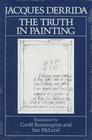 Republicanism, Marxism, Feminism, Deconstructionalism, Fascism. These are ways we ascribe meaning to the world and to experience. Each one is a perspective, each one of them sees certain things very, very well, and other things, not so well at all. Postmodernism felt to me to be an interesting place from which to look at the world -- playful in a complicated sense, distrustful of the easy answers of ideology, and sometimes very, very strange. Sixty pages into The Truth in Painting things felt very strange indeed.(6) But I'm a science fiction writer, and if I find the thought of one Frenchman, my contemporary, alien, what does that say about the future? Maybe it's a good idea to spend some time thinking about different thought perspective, to find a different place to stand. Good for a writer who wants to provide the reader with the sense that they have entered a world that is a little different from their own. Good for a person who doesn't wish to become too trapped in their own prejudices and habits.
The air is awfully thin up there for me. I want to be postmodern. I like thinking up there and I wish I was a member of the thought Olympics. This work is not, I hope, a thinly veiled explanation that says the reason I am not postmodern is that there is something wrong with postmodernism, because while there is a lot wrong with postmodernism(7) the reason I'm not postmodern is because at the core of the ideas I associate with postmodernism is a certain skepticism, a critical distrust of authority. One entire section of The Truth in Painting is a discussion of one footnote in Hegel's Lectures on Aesthetics. Derrida admits Hegel was interested in something else, that this is a lot of discussion for one footnote, and that people will accuse him of making a mountain out of a molehill -- but of course, Derrida's critique of the footnote opens up a whole discussion of just how we define the boundaries of art. In some ways Derrida is The Angry Young Man, forever critical and combative, standing up in the middle of the lecture to say to the teacher, "The United States is not a democracy. It's a republic." Which is true but not the point right now at all -- I am the student who wants to hear the teacher's point and wants the Angry Young Man to sit down and shut up, thank you very much. I want to go with the flow. I guess much as I want to be watching the edges, in the end it is very hard for me. It's hard for me to write books with plots and believable characters, so I don't have a lot of energy left to look at the edges, to see how plot and character work. Postmodernism often requires me to be smarter than I am.
I write rather conservative fiction, structurally. Zhang never points out that he is a character on paper and when I try to do that, I've never yet managed to be either clever or illuminating. My books and stories assume you go with the flow, that you pretend, that you, in the cliché we use in teaching, "suspend disbelief."
This last century has not been a comforting century for people who want to get with the program. Too often the flow has been racist, classist, oppressive of women (of which I am one), and going with the flow has meant collaborating silently with devil. I voted for Nixon in the fourth grade because I didn't know any better and because my dad was going to vote for Nixon. I am still the girl who would have voted for Nixon, and so I think maybe it is good for me to study these skeptics, these critiques, these people who will not trust. I am not postmodern. But I haven't given up hope.
Notes:
1. The Postmodern Explained Jean-François Lyotard, University of Minnesota Press (Minneapolis and London, 1992) is translated from the French. The original title was Le postmoderne expliqué aux enfants, which makes me wonder what they are putting in the water over there in France that they have such precocious children.
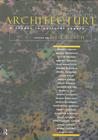 2. "Functionalism Today," which I read in Rethinking Architecture, ed. Neil Leach (Routledge, London and New York, 1997). I wasn't familiar with Adolf Loos, or the German architectural movement that Adorno critiques in this essay, but I kept reading hoping it would all become clear, and lots of it did. This is a subtle, supple thing I have read a couple of times. I don't read it well, or fully understand it, but reading it half-assed is still worth it.
3. "La loi du genre" For English translations by Avital Ronell, see "The Law of Genre" in Acts of Literature, ed. Derek Attridge. Routledge, New York and London, 1992)
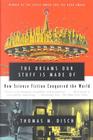 4. In The Dreams Our Stuff Is Made Of Thomas M. Disch says much the same thing when he talks about the different kinds of science fiction -- the hard science work of Greg Benford and Greg Bear; Anne McCaffrey, whose work he describes as the SF equivalent of "girl and horse romances" and a list of others who, as he points out, are shelved alphabetically in books stores with Ursula Le Guin, Kim Stanley Robinson, Gene Wolfe and others.
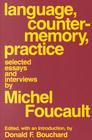
5. Michel Foucault, "Preface to Transgression' in Donald Bouchard (ed.) Language, Counter-Memory, Practice, Donald Bouchard and Sherry Simon (trans.), Ithaca, New York: Cornell University Press, 1977, p.34
 6. The Truth in Painting, Jacques Derrida, again. Well, he's difficult. I spent a lot of time thinking about his stuff -- more than I did the work of other, equally interesting people who I nonetheless found less difficult and therefore spent less time thinking about.
7. Deconstructionism is, in some ways, an ideology of nitpicking. It doesn't provide a blueprint for a new society, the way Marxism does. It examines things, particularly the language of how we think. A microscope is a fine tool, but it doesn't help you build a hospital. A hammer is a much less sophisticated tool, but a lot better for building.
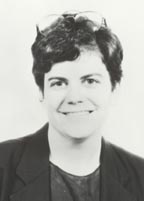 Maureen F. McHugh is the author of the critically acclaimed novels Mission Child, China Mountain Zhang -- which was a New York Times Notable Book, nominated for both a Hugo and a Nebula Award, and winner of the Locus Readers' Poll for Best First Novel, a James Tiptree Award, and a Lambda Award -- and Half the Day is Night. She received the Hugo for her short story "The Lincoln Train," and other stories have appeared in several publications and anthologies, including in the highly regarded collection Starlight 1. Ms. McHugh lives in Ohio with her husband and stepson.