
| Ross Macdonald | |
| by Tom Nolan |
 A journalist for much of my life, I soon grew used to deadlines of days, weeks, or at most a few months. I'd be shocked at the time some authors acknowledged spending on a nonfiction work, wondering, "How could it take seven years to write a single book?"
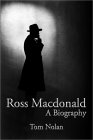
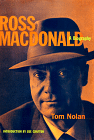
That was before I began researching and writing Ross Macdonald: A Biography*-- which took 10 years.
 Two of those years were spent in the Special Collections library of the University of California at Irvine, which holds the papers of Ross Macdonald (real name, Kenneth Millar: 1915-1983), author of the Lew Archer books . . . books a New York Times critic called "the finest series of detective novels ever written by an American."
UCI also houses the papers of Macdonald's wife, Margaret Millar, another well-regarded suspense-fiction novelist. (Her book Beast in View won the Edgar Award in 1955.)
Research, far and wide
 In addition to poring through dozens of cartons of correspondence and manuscripts -- not only at Irvine but from archives in Texas, Indiana, and New Jersey -- I interviewed over 200 people, in person or by telephone.
I drove to Santa Barbara to meet Margaret Millar (who died in 1994). I traveled to Kitchener, Ontario, where Kenneth and Margaret Millar spent their childhoods; and to Ann Arbor, where Ken Millar taught at the University of Michigan and earned a Ph.D. in English criticism (with a dissertation on Samuel Coleridge).
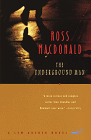
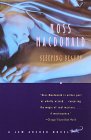
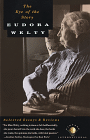 I went to Jackson, Mississippi, for three days of conversation with Eudora Welty, whose celebration of Ross Macdonald's 1971 novel The Underground Man on the front page of the New York Times Book Review helped make that book a runaway bestseller and led to a strong friendship between the two authors. (Macdonald dedicated his 1973 novel Sleeping Beauty to Welty; she dedicated her 1978 collection of essays and reviews, The Eye of the Story, to him.)
Ross Macdonald was a writer's writer, a wonderful stylist whose intricately-plotted fiction was admired by all sorts of non-mystery authors: American novelist Reynolds Price, English poet Donald Davie, English playwright David Hare, Russian poet Andrei Vosnesensky, Irish author Elizabeth Bowen.
The long and short of it
 The longest interview I had was with Donald Ross Pearce, an eloquent professor emeritus at the University of California at Santa Barbara. Pearce was friends with Millar as an undergraduate at the University of Western Ontario, as a grad student at the University of Michigan, and as a Santa Barbara resident in the 1950s and 60s; we talked for a total of 26 hours.
The shortest response I received was from author E. Howard Hunt, who answered a written question with a single word: "No."
Revelations, fascination
 I discovered startling facts about my subject and his family from their friends, from old newspaper stories, and from unpublished papers. The comparison between Macdonald's biographer and Macdonald's detective Lew Archer proved inevitable. In time, I learned much about a man who went out of his way to keep private a personal life that he wove into fiction. And I was able to draw connections between his life experience and the books it inspired -- the sort of biographical connections Millar believed a literary biographer ought to make.
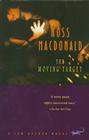 When at last I'd finished writing Ross Macdonald: A Biography, Scribner published it in 1999, the year that heralded the 50th anniversary of the first Archer novel, The Moving Target (which was later made into the hit 1966 Paul Newman movie "Harper"). The biography was generously reviewed, nominated for the Edgar Award and the Anthony Award, and won the Macavity Award. Poisoned Pen Press has just published a trade paperback edition.
What's behind Macdonald's style?
Another independent press, Crippen & Landru, is almost simultaneously publishing Strangers in Town: Three Newly Discovered Mysteries (HC 188594151X, paperback 1885941528 ) by Ross Macdonald, for which I've written a lengthy introduction and prefaces.
Those three Macdonald novellas, found by me in Millar's archive, are written in his 1950s style, which Ross Macdonald consciously built on the hard-boiled tradition of Dashiell Hammett and Raymond Chandler.
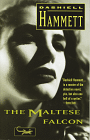 As a Kitchener, Ontario, teenager in the 1920s, Ken Millar was profoundly affected by reading Hammett's The Glass Key and The Maltese Falcon. As a Michigan grad student in the '30s and '40s, he was excited by the vivid prose of Chandler (such as The Big Sleep and Farewell, My Lovely). As a U.S. Naval officer during World War II, he read everything he could find by F. Scott Fitzgerald, whose The Great Gatsby became a lifelong favorite.
Inspired by these and other authors, by the 1960s Macdonald had developed his own mature style and highly individual themes. His books directly inspired a generation of crime fiction writers, among them Jonathan Kellerman, Marcia Muller, James Ellroy, Richard North Patterson, and Sue Grafton -- whose series character Kinsey Millhone works in Macdonald's fictional city of Santa Teresa, and who (at Scribner's invitation) wrote the introduction to Ross Macdonald: A Biography.
Recommended reading
Several Ross Macdonald novels are available in trade paperback from Vintage Crime/Black Lizard, including The Galton Case (an imaginative reworking of elements of Ken Millar's personal history); The Chill, a great plot containing echoes of Greek philosophy and English Romantic poetry; and Sleeping Beauty
* A March/April Book Sense 76 pick
“This moving and well-researched biography of the man behind the classic Lew Archer novels deserved all of the acclaim and awards it received in hardcover. Nolan shows the man behind the novels in a manner that nicely parallels Macdonald's own tradition of having the past affecting the present.”
- Mary Elizabeth Hart, Mysterious Galaxy, San Diego, CA