
Charles Rafferty
Interview by Gavin J. Grant
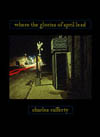
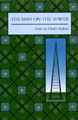
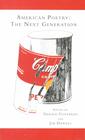
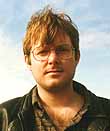 Charles Rafferty's first book of poetry, The Man on the Tower, was published by the University of Arkansas Press in 1995 after winning the Arkansas Poetry Award. His latest book is Where the Glories of April Lead (read an excerpt). He has several chapbooks out and has published poems in an impressive array of journals,* as well as in an anthology published by Carnegie Mellon University Press: American Poetry: The Next Generation. He has received the Robinson Jeffers Tor House Prize for Poetry, the Brodine/Brodinsky Poetry Prize, and a grant from the Connecticut Commission on the Arts. He currently works as an editor for a technology consulting firm. He lives with his family in Connecticut.
BookSense.com: Tell us about yourself.
 Charles Rafferty: Well this one is tough to answer -- I'll give you the statistical answer for now. I'm 36. I'm married to my college sweetheart whom I met when I was 19. I have two daughters -- one 3 years and one 6 months. I'm a technical editor by trade and currently work for a computer consulting firm. I occasionally work at part-time teaching gigs. I live in Sandy Hook, CT. This is definitely the toughest question to answer.
Do people actually make a living writing poetry?
I suppose some people do, but I'm not one of them. If I'm lucky, my poetry will earn enough money to make a mortgage payment per year, but even this is rarely from direct sales of poetry. Most of the money is from grants or contests or reading fees -- not actual royalties from books. It's really quite humiliating (I mean this in a good way). Last year, the University of Arkansas Press refused to give me my royalty check because it wasn't worth the money to go through with the transaction. I think I made a dollar that year. The book came out in 1995 and sold well at first, but has declined steadily each year thereafter. I suppose people are more likely to make money off their poetry indirectly -- by getting a good teaching position.
Do you write all the time? Is there one place (the attic! the treehouse? the cellar...) where you'd rather write?
 I do try to write every day. I have a fairly involved commute where I end up taking trains and shuttles, and there's a good bit of waiting around. So most of my writing gets done on my commute (about an hour and a half in each direction). That's how I composed the bulk of Where the Glories of April Lead. The Man on the Tower was composed mostly on my lunch breaks, back when I had a car commute. I think it's important to write every day, if for no other reason than to eradicate the bullshit that thrives amid pretense (an obvious problem for poets). The only way to get rid of it is to get it onto a piece of paper that you can leave in the back of a drawer somewhere. I believe it's important to write even when the poems are shitty: Stabbing at dirt can polish a knife.
Without getting too mechanical, do you find that you tend to write your poems in the same way, starting from one idea, or notion (or whatever)?
Usually it's a matter of me scribbling in my notebook during my morning train commute until something interests me, or perhaps links back to something I'd scribbled about the week before. Then, when I finally have enough of these connections, I sit down and type up the poem. Then, I'll end up working on that poem pretty relentlessly. I like to get done at least a draft a day.
Of course I do find myself getting into a rut subject-wise every now and then, which is really just a signal to start paying attention to something else, but the above-described method is pretty much how I work. On a couple of occasions, it's been radically different, where the poem has come out whole and in a single draft, but this happens very seldom, maybe one in every couple of hundred poems.
What -- besides the limousines and the trips in the private jet to the Caribbean -- has kept you at it over the years?
Well, I'm not sure. Much of it may be stubbornness -- the fact that I've made these claims about myself and I'd be humiliated if I stopped now. I think a bit of mulishness is important. To have successful poems over the long haul, you have to be the kind of person who dusts the furniture when there is no hope of visitors. Poets almost never have visitors.
Oh yeah, and it's the only occupation that makes liking to have a drink now and then remotely excusable, even acceptable.
Another writer referred to poetry as possibly being the "soul of a nation" -- at least in times of strife. What do you think?
 Oh, I suppose it could be, but I doubt it -- at least in the sense that, in America, there is not a single poet that speaks for everyone. Or even a single poet that everyone knows. You say in "times of strife," so I'm naturally thinking of the 9/11 disaster. But I don't know a single person (I mean people that aren't poets -- or married to poets) that looked to poetry for solace in the aftermath, at least none that will admit it. This is not to say it couldn't happen, only that it's unlikely on a grand scale. I don't think poetry has that kind of power in this country. And I'm glad of it.
What are you glad of it? Is it the present day unwillingness to let anything have too much sway over us, or a more specific feeling towards poetry?
My reasoning is probably more petty. I just think it's silly when I see people using poetry -- or any art form -- as a rallying cry. Such tactics make me resist being associated with poetry. The grand claim that poetry can "heal" is largely embarrassing. It smacks of the "group hug" and strikes me as something that, while possible, is better left not talked about. Maybe that's my repressed upbringing comeing through. The bottom line for me is that poetry has great power, but its power is as a clarification, not as a salve.
Do you feel connected to the poetry world? Is there, in fact, such a thing?
No I don't feel connected to the poetry world, though I believe there is such a thing. Since I took an MFA in 1990, I've been more or less divorced from academia, which is where most good poetry thrives (and paradoxically most of the bad). Except for some part-time teaching jobs I've taken out of necessity, I've always spent my time career-wise in the technical editing field. There aren't a lot of poets in that field, and so I can go months without ever even discussing poetry, with the exception of my wife. I will go to the occasional poetry reading, but it takes an incredible amount of effort to extricate myself from the routines of work and family and small children -- and these are routines I like.
So I'd say I'm mostly unconnected, and, to anticipate your next question, I don't think this is a bad thing. Poets collect themselves into schools for the same reasons as fish: safety in numbers, an impressive shimmer in the shallows. I'd rather hone my craft in solitude.
Quite a few of your poems deal with the natural world. Are you an outsdoorsman?
Oh, I suppose I am. I love to hike and camp. I'm not sure why. But I love isolation, or at least the illusion of it. It give me a clear place to think or to not think. And the woods are a place that makes me want to pay attention. If I can't look at the woods, I'd rather look at women. In fact, my wife says I smell like "the other woman" when I come home from a day in the woods.
How did you (in Connecticut) connect up with Mitki Mitki Press (in North Carolina)?
Well, Kevin Keck, one of the founders, had come across my first book (The Man on the Tower) and asked me for a manuscript. It's that simple and that flattering. I had some hesitations about giving the book to an unproved press, but I made the right decision. Mitki did a great job with it. I'm very pleased.
What are you reading?
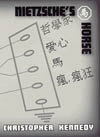 Well, I don't mean this as a plug at all, but I'm reading Chris Kennedy's book, Nietzsche's Horse, which is the second book out from Mitki Mitki and which I've only just received. It's good. I'm generally very suspicious of so-called prose poems, which I suppose many of these are, but these pieces have a wonderful quality about them -- a little bit of Russel Edson and a little bit of Mark Strand. They are pleasingly odd and accessible -- like a circus freak show that charges you only 50 cents to get in. I'll return to it again.
If you worked in a bookshop, what would be on your Staff Picks shelf?
 Well, I suppose I'd have to side with Stephen Dunn's recent book (Different Hours), the one that just won the Pulitzer. It's great to finally see him getting some serious recognition. While I don't think the book is his strongest, it's a great read and contains enough solid poems that you don't end up wondering if the fix was in, which is sometimes hard to say after reading some prize-winners.
* Charles Rafferty's poems have appeared in Massachusetts Review, DoubleTake, TriQuarterly, The Southern Review, The Underwood Review, Quarterly West, Washington Square, Connecticut River Review, Louisiana Literature, The Laurel Review, Poetry East, and Connecticut Review.