
| George Saunders Interview by Gavin J. Grant |
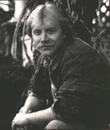 George Saunders is the author of two acclaimed short story collections, Pastoralia (coming out in paperback in June), and CivilWarLand in Bad Decline, and one children's book, illustrated by Lane Smith, The Very Persistent Gappers of Frip. He lives in Syracuse, NY, where this year they almost broke their all-time snow record, but didn't quite manage.
BookSense.com: How did you end up in Syracuse?
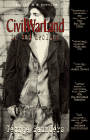 George Saunders: We were living in Rochester and I was working for an engineering company when I wrote that first book, CivilWarLand in Bad Decline. My wife and I had been in grad school here together back in the 80s, and then a job opened up and Tobias Wolff called and asked if I wanted to interview. I got the job and hesitated whether to take it or not and finally decided to go for it. I've been here about four years now.
I'm from Chicago originally. I came here in 1985 or '86, when I got into graduate school in Syracuse. I'd been living in Texas and not living very well, working these not-so-great jobs. Then I got admitted and it was two years of writing time, so I leapt at it. I got admitted into the Master's program and they gave you a couple of years of fellowships and all that stuff. I came for two years and haven't left. At that time it was called an MA with an emphasis in creative writing, but for all practical purposes it was a two-year MFA. A few years after we left they turned it into a full-fledged three-year MFA program. At that time I was just looking for any sort of shelter. I was working as a groundsman in Texas, playing in a band, didn't really have any direction, didn't know any writers. As it turns out it was a great opportunity to get a crash course in contemporary writing and to get a little bit of time to try to get something together.
What kind of music was it?
That particular band was a country and western band. It wasn't very good, but we didn't have to ever rehearse. You would show up at eight and play until two in the morning and get $50 cash. It was just all the old standards -- there weren't too many people there, so if you did make a mistake it didn't matter that much. That was really just a job.
Do you still play?
I play for fun around the house on the guitar, but nothing very good.
You don't have a website.
 I just don't know how to do it! It seems the kind of that someone else should do if they're interested, but you shouldn't really do for yourself. Like putting up a billboard on your front yard. The way my life is now, it's so crazy that I don't have time to acquire a new skill like that.
I was reading about Michael Chabon and he says he uses it as a way to archive small things he does that wouldn't otherwise get seen. I don't know. I'm teaching now and I have two kids . . . maybe I'm just disorganized, but I can't find the time to really do anything like that.
How did The Persistent Gappers of Frip come about?
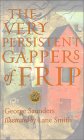 I have two daughters, and one of the things I would do when I put them to bed at night is I'd make up these crazy stories. For me, the whole thing was to not ever think about the story before, just to make it up on the spur of the moment -- which is very much different to what I do when I write. So that was fun. It was great to have an audience because you could tell what they were responding to in real time. They seemed to like stories where the central character was sane and the rest of the world was crazy, which is what I suspect is what it feels like to be a kid. I had this one recurring character, this little girl who had this dysfunctional family and these crazy neighbors, but she was always this beam of intelligence. Things would swing way out of control and in the end she would always bring it back.
I don't remember exactly whether I had told something like that story, but somehow I had this little fragment on the computer about these little creatures that come out of the sea. I think maybe because of Dr. Seuss, a kid's book for me is a real glamorous thing. I think they're really beautiful, so I tried to write a few other ones and made the mistake of trying to write them for kids, which is fatal because then you get, "Cliffy, the fuzzy bunny was . . ."
I started playing around with that idea of those things coming out of the sea. As it usually does for me, sentences that don't suck lead me to questions. "Why do they come out of the sea? Why do we care? Why is it a problem?" and so on. I would fart around with it once a week, and then two or three Christmases ago, when I was done teaching, I had an uninterrupted couple of months. So, I said, "Let's see if I can finish this thing," and it came out pretty naturally and easily. I sent it to Random House and they didn't know what to make of it. They sent it to Lane Smith, and he had read CivilWarLand, and so from there it took off, because -- since he was involved -- they were real excited about it.
Lane Smith is kind of a superstar of kid's books. What was it like working with him?
 It was really easy. It was mostly me just saying, "Yay! Keep going!" I think he's really intuitive. He's very professional. Somehow he's able to be steady in his work and still brilliant. He doesn't seem to obsess about it outwardly the way I would. I went to New York to meet him and he had already done some preliminary work. It had maybe been only two or three weeks but he already had an amazing wall of stuff. Ideas he'd thought up, goat farms, and sketched goats, and all that kind of stuff. I put that as one of my all-time great moments walking in and seeing all this stuff -- which was so much more than I could have imagined it being, 'cause I'm not an artist. The only thing I ever suggested was that he just do more. There were a couple of drawings I imagined he would do and he didn't, and I just asked if he would and he did. As far as collaboration -- we really are of a like-mind anyway -- it was very painless. It was funny, I think my vision of the book would have been much more mundane than his, both in the images themselves and in where he chose to put the pictures, and what he chose to make them of, was more subtle and sophisticated than I could have come up with. So I was just thrilled, and I know he felt it was some of the best work he had done.
Are you working on another one with him?
I think so. I have this story I'm working on -- that's getting longer and longer -- I've talked with him about. Until he sees it we won't know. We've talked about it and I think it might work.
The Gappers book was tricky because there was some confusion about the market. I always thought it was a kids' book, but when it came out it was put in the adult section. It was one of those things that fell between the cracks. We went to one meeting and I just said, "It's a kid's book, and we'll be pitching it to people who read The New Yorker and their kids." Then somebody decided that it would be suitable to market to adults -- I think with the idea being that it would cross over. But the interesting thing is that, mechanically, in the big chains you can't cross over. If it's in the adult section, it stays there, and if you move them to the kids' section -- which we did in some places -- they just move them right back. It was a little frustrating that way.
Any kind of slipstream or crossover stuff is difficult, because you get down to the absolute physical question of "Where do you put it on the bookshelf?"
Right. When our kids were little we would just wander in there and pick up the two or three things that looked interesting. So with this book I just thought it would be natural -- especially as striking as the cover design is -- it would be great if it sat in the kids' section. But it didn't. I was sort of disappointed. Based on what I see when I go to schools and read it, third and fourth graders totally get it. They're not put off by the sentence-length, or all the politics; they totally get it. Which is what I knew from reading to my daughter and making up the stories. They are very bright and if you take any idea, political or whatever, and put it on a human scale, they're all over it, they love it.
Are there any other illustrators you'd like to work with?
I'm kind of spoiled! I think after [Lane], it would be hard to even say. Off the top of my head there aren't any I can think of.
You are the exception to the rule about getting collections of short stories published: For the most part, if you're a short story writer the larger publishing houses won't touch you. How did you slip through the cracks?
 I really don't know! I'm sure the first one was helped along by the publishing tendency to want a virgin. I think it's The New Yorker thing. There's at least the idea that every single New Yorker reader might buy your book, which isn't the case. I think I've been really lucky.
How many of your stories has The New Yorker published?
Everything in Pastoralia was in there, and one from the first book, so that makes about seven or eight.
Didn't the fiction editor change at The New Yorker in that time?
[At first it was] Dan Menaker, who was actually the editor of my first book -- he accepted the first story I ever sold there, "Offloading from Mrs. Schwartz," and was in my first book. Then, when Tina Brown left, he left and Bill Buford came in, I think in '96 or so. He's been really good to me.
What is it about the short story that attracts you?
I think the truth is that you either have or develop certain tricks or skills, or a way of seeing beauty in a form -- and for some reason the short form, I get. I can understand how to go on and be entertaining for eight pages but, at least so far, when I've thought about being entertaining for 200 pages, I don't have a real strong visceral sense of how to do that. I love novels, and I've always wanted to write one, but somehow the pathway between my admiration for it and my visceral idea of how to do it -- I haven't quite broken that code yet. I'm starting to think that if it does happen it'll start organically, rather than by design. This kids thing I'm writing is so far the longest thing I've ever done and it seems to be okay, it holds together pretty well. But I was hoping it would just be a story, and it just keeps kind of sprouting these little rooms that kind of make sense.
I'm 42 so I finally just decided, "Well, if it turns out that the only thing you can do halfway decently is write stories, then you should just be grateful that you can even do that, and don't get all stupid about it and insist on writing a mediocre novel just so that you can say you've done it."
I think as a writer you have certain gifts and problems -- not by design or something that you asked for. The form [of writing] has to do with finding one that lets you lean heavily on your strengths and avoid your weaknesses. The thing I figured out how to do is compress things. I can write a fairly mediocre three pages and then compress it down to one that seems lively -- where the obvious things have been cut out, the banal thought patterns have been excised. So that's basically a short medium because you're taking something and cutting it down. The strength of the prose has more to do with eliminating obvious connections rather than extending them the way you might in a novel.
A lot of your stories take inspiration from pop culture. Is that something you're meaning to infuse them with?
 No, not really. It's a complicated question. For me, you look for something that's at hand, that you can write about in a language that doesn't seem to you clichéd or purple or overused. Somehow for me when I open that window what comes in is pop culture. Somehow writing about stuff like that keeps a certain kind of purity about my language. When I was in grad school I was a big Hemingway and James Joyce fan. So what I would do is say, "Since I want to sound like Hemingway, I better write about things that Hemingway might write about, and might be say-able in his language." Then you'd have to pick yourself totally up off your own experience and imagine what fly-fishing or war was like. Then you get into this uncomfortable thing of trying to steal both language and subject matter.
What I found was, if I keep with the diction I know -- which is working class -- and the experience I know, which is middle-class American, then, in a funny way, the language is more original than if I tried to be more conventionally literary. So it's not like I'm thinking, "Okay, today I'm going to write a story about pop culture," but, "Today I want to write a halfway-decent sentence." When I do that the stuff that fills it in is what you would put under the category of pop culture, I guess.
Do you think that short attention span of pop culture leads you toward short stories?
I can come up with a certain idea or tone or something that's interesting that seems to only be sustainable defensively for 12 pages. If I took this idea and tried to stretch it out to 100 pages, it would seem like too little for a novel, and I think that has do with pop culture. I look at my experience…I don't really have any confidence in overarching philosophy or an aesthetic dictum, but I do have confidence that if I approach it pointillistically something will emerge. If I just look at small bits of data intensely, then string eight of those looks together, then I take it as an article of faith that that resulting book will have resonance. If you were in a house and you had blinders on and wanted to construct a house -- since you don't have the eyes to do it, maybe by putting 12 different observations together you can construct some kind of working model of the house. I think the short form works much better for that rather than a 300-page discourse on American life, which I don't have any sense of knowing enough to be able to sustain.
What about if you smash a half-dozen ideas together?
 I don't know if I have the maturity to do that just yet. I'm sure that you write a novel the same way, which is that you set yourself up with a structure so that you can put 12 or 15 small things together.
So far [what stops me] is just a paucity of ideas! If I can get two a year I can actually follow through on, then that's great. It's part of the fun of it, saying, "Yeah, you're kind of dense! You have two ideas a year, but at least you're humble enough to know that you better work those two and don't pretend you had six."
It's not that I don't enjoy your stories or want you to write novels, I was just curious . . .
 It's interesting that you asked because I'm at a point where I'm starting new things and trying to figure out -- I have to really resist that feeling you have at the beginning of a project where you say, "Ah! This is a novel." Then all of a sudden your eyes are off the road.
I have this idea that if you simply pay full attention to the place you are in the text, with real concentration and real openness, then you can't go wrong, because the next moment will respond to the previous one, and so on and so on. When the energy falls off you say, "Okay, I've defined my turf now I've got to refine it." Outlining, stuff like that, it's unnatural to me. I wasted a lot of time where you get that feeling, "I see where this is going!" and suddenly all these possibilities present themselves, and then you write them down…and suddenly you're eight chapters ahead of yourself, which means you're no longer in the moment that you're supposed to be in. Then, all the possibilities that could be presenting themselves are subjugated to your "long-term vision" of the thing. It's funny, because I'm trying to do some screenwriting and they really work on outlines -- they really like that whole idea of having the whole dramatic structure outlined. It's really a foreign thing to me, it doesn't feel right at all.
Are you still writing short stories?
 I'm writing a story now that is definitely science fiction. I have the impression that the distinction [between fiction and science fiction] was more meaningful at other times. It seems to me that growing up with "Star Trek" and "Star Wars" and all that, [science fiction] bled over [to the mainstream] so often. Maybe it has do to with what you do with it.
I read some of the early stuff from the early 1950s, and the whole point seems to be "Technology!" Whereas with the more contemporary stuff, it's exactly the same thing as a historical novel, where you just say, "Even though I'm writing about the civil war, I'm not really writing about the civil war, I'm writing about human nature and using that as a prop." It's the same thing if you set it 6,000 years in the future. I think if you're writing about, as Faulkner said, "the human heart in conflict with itself," then you're fine, no matter what props you use to get at that. I like the idea of doing something that's almost tongue-in-cheek sci-fi. For me it was a real defining moment in "Star Wars" when that ship flew over and you could see it was all dented up on the bottom. That seemed to me like a big moment where the future wouldn't be any different from right now.
What are you reading?
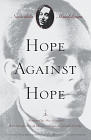
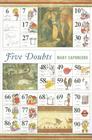
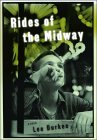
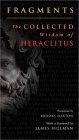 I've been reading some new stuff. There's a new book of prose poems coming out called Nietzsche's Horse by a guy named Chris Kennedy that's really cool. He's a working-class writer and the form he's working in is really interesting. I love that Ben Marcus book, The Age of Wire and String. Mary Caponegro has a new book coming out, she's a wonderful experimental writer. She's got one called The Star Café, and one called Five Doubts. There's a poet named Michael Burkard who has a book called Unsleeping. He's really brilliant, I love to read his stuff. It does the same thing to me as Marcus does, which is you read it and you go, "God I just can't wait to get up and start writing again!" I'm teaching a class in Russian so I'm reading Nadezhda Mandelstam, The Master and Margarita,and all that stuff. Brooks Haxton has a new book of translations from Heraclitus, Fragments: The Collected Wisdom of Heraclitus, that's pretty nice short little pieces. There's a book called Rides of the Midway by Lee Durkee, a really good southern novel.
So you read a lot?
 Yeah, I read a lot for my classes and this is just the stuff I've been able to squeeze in on the side. Mostly this time of year I'm reading thesis work for my students -- but that's good stuff, too. When I first got out here I went to work for an engineering company, and so I was not reading much because my free time was devoted to writing. When I first got this job I just wallowed in books. I had a lot of time because I was commuting and I didn't have a lot of committee work. Now it's all come back around, so any reading is really squeezed in, because there's so much schoolwork. But I can't complain -- it's a sweet deal.
Do you have any good bookstores in Syracuse?
There's one called Books And Memories[1] down on James Street. With Pastoralia and the Gappers book I have been amazed by how important the independents are and what a good job they do. The independents just saved Pastoralia, and the same thing with Gappers -- they were selling the hell out of it, so they were really important.
[1] Books and Memories, 2600 James St. Syracuse, NY U.S.A. 13206 Phone 315-434-9268 Fax 315-463-1524
%@ include file="/files/peoplearchive/lowerlinks.jsp"%>